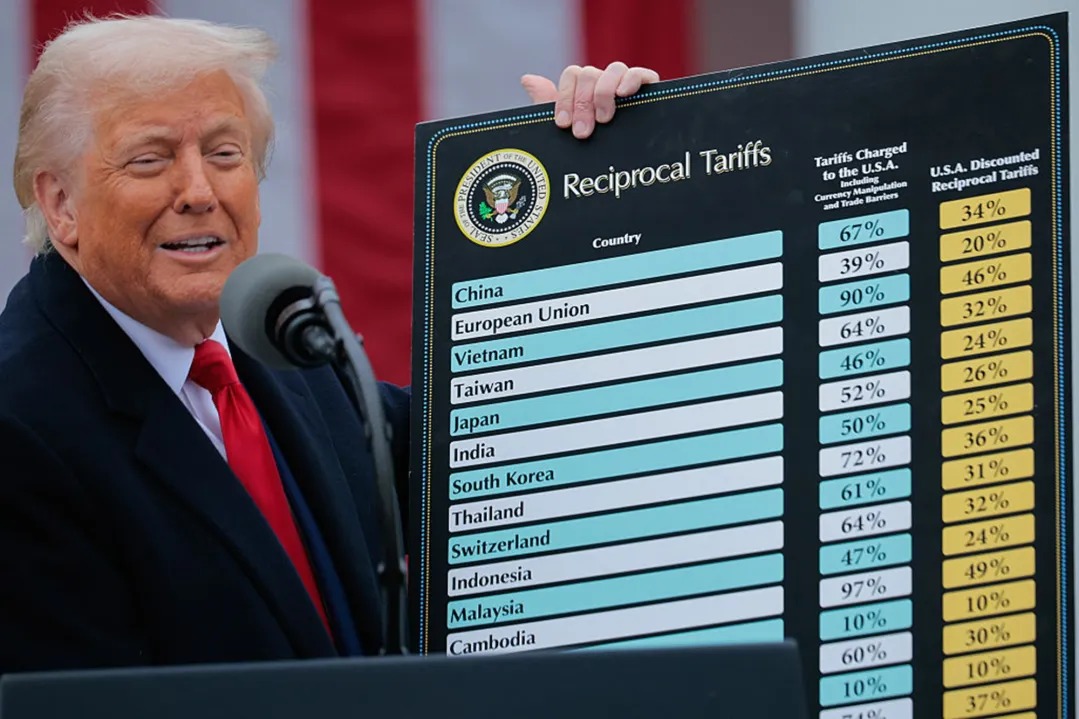
Tariffs Impact on Investments 2026: Why This Matters Now
The tariffs impact on investments 2026 is no longer a theoretical debate. It is showing up in earnings warnings, equity volatility, inflation expectations, and portfolio positioning across global markets. Reuters reported this year that tariff threats have pushed volatility gauges higher, while stocks, Treasuries, and the dollar have all moved sharply as investors reassess growth and inflation risks.
What makes this cycle different is that tariff policy is still fluid. Reuters has reported that trade policy keeps shifting through court rulings, replacement levies, pauses, and new tariff structures, leaving businesses unsure whether to restock, reprice, or delay investment. That kind of policy uncertainty matters for investors because markets dislike ambiguity almost as much as they dislike bad news.
In practical terms, Trump tariffs investing in 2026 is now a question of margin protection, pricing power, and supply-chain resilience. The companies most exposed to imported inputs, global manufacturing, or price-sensitive consumers are under the most pressure, while firms with domestic production or strong pass-through ability are better positioned. Reuters’ reporting on companies across autos, retail, industrials, and healthcare shows exactly that pattern.
How Trump Tariffs Are Reshaping Your Investment Portfolio Right Now
The first effect of tariffs is usually simple: higher costs. Reuters and the European Central Bank have both found that U.S. consumers and importers absorb most of the tariff burden, while trade volumes fall and exporters also suffer from weaker demand. That is the core transmission mechanism that turns tariffs into a portfolio issue rather than just a trade-policy issue.
The second effect is margin compression. Companies can try to absorb tariff costs, but many eventually pass those costs to customers. Reuters noted in January 2026 that tariffs were already lingering over earnings, with companies adjusting pricing and supply chains while consumers resisted further price increases. That dynamic is classic stagflation pressure: slower growth with sticky inflation.
The third effect is macro risk. Reuters polling in April showed that economists pushed back expectations for Fed rate cuts, with inflation concerns elevated and policy relief delayed into late 2026 for many forecasters. That matters for portfolios because higher-for-longer rates tend to pressure valuation multiples, especially for long-duration growth stocks and speculative names.
The Big Market Mechanisms Investors Need to Track
There are three channels through which tariffs are reshaping the market in 2026:
First, they affect earnings quality. When import costs rise faster than companies can reprice, profit margins shrink. Reuters’ coverage of GE HealthCare and Fastenal shows how tariff-related cost pressure can quickly appear in guidance cuts and margin warnings.
Second, they affect inflation. Higher input costs flow into finished goods, freight, and services pricing. Reuters’ reporting on inflation expectations and the Fed’s slower path to rate cuts shows that tariffs are feeding into the macro backdrop rather than staying isolated in one sector.
Third, they affect risk appetite. Reuters noted that tariff shockwaves have driven major market swings, including a sharp equity selloff and a jump in safe-haven demand when tariff headlines hit. That is why trade war stocks, defensive sectors, and quality balance sheets have become more important in portfolio construction.
Which Sectors Are Most Vulnerable to Tariff Pressure?
Some sectors are structurally more exposed than others. Autos are a clear example: Reuters reported that automakers are planning billions of dollars in U.S. investment while still asking for clearer trade rules, because tariffs can drive up production costs and distort supply chains. That makes autos one of the most tariff-sensitive areas in the market.
Retail is another weak spot. Reuters found that consumer-facing companies are still navigating tariff volatility and cautious shoppers, with corporate statements and filings pointing to billions of dollars in combined tariff-related financial impact. When retail margins are already thin, tariff shocks can hit both revenue and profitability.
Industrials and distributors also feel the squeeze. Fastenal said tariffs pushed costs up faster than it could raise prices, and Reuters has reported similar margin pressure across industrial supply chains. That means industrial names may look cyclical on the surface but can become margin traps when import dependence is high.
Healthcare equipment and diagnostics are not immune either. GE HealthCare cut its 2026 profit outlook after citing inflation and tariffs, a reminder that even “defensive” sectors can be hit when they rely on complex global sourcing.
Trade War Stocks: Who Can Benefit When Tariffs Rise?
Not every stock loses from tariffs. Some companies benefit from reshoring, domestic manufacturing, or pricing power. Reuters has repeatedly shown that firms with more localized supply chains, stronger brand power, or less direct import exposure tend to navigate tariff volatility better than companies that depend heavily on cross-border sourcing.
In retail, TNN noted that some businesses are more insulated because of diversified sourcing and customer networks. While in autos, some companies may accelerate U.S. investment to avoid tariffs and localize production. In industrials, domestic suppliers with strong backlog and pricing discipline can outperform import-sensitive peers.
That is why trade war stocks are not a single category. They split into winners and losers based on three factors: how much they import, how much pricing power they have, and how quickly they can shift supply chains. In tariff regimes, those details matter more than broad sector labels.
Portfolio Tariff Strategy: What Investors Should Actually Do
A sensible portfolio tariff strategy in 2026 starts with balance, not prediction. Since tariff policy remains unstable and court outcomes can alter the rules quickly, investors are better off avoiding oversized bets on any single tariff outcome. Reuters has documented how legal challenges, temporary measures, and replacement tariff structures have kept the trade backdrop uncertain.
A more resilient approach is to tilt toward businesses with the following characteristics:
- Strong pricing power, because they can pass through part of the tariff burden.
- Domestic revenue bases, because they are less exposed to cross-border friction.
- Low leverage, because higher rates and slower growth are harder to absorb when debt is heavy.
- Stable free cash flow, because tariff shocks often hit margins before they hit headlines.
That does not mean abandoning growth stocks. It means being more selective. In a tariff-driven market, the best growth names are usually those with strong balance sheets and a clear path to earnings durability, not just top-line momentum. Reuters’ reporting on sector guidance cuts shows why earnings resilience is now a primary factor in portfolio construction.
S&P 500 Tariffs: What They Mean for Broad Market Exposure
For broad-market investors, S&P 500 tariffs matter because the index is full of companies with global supply chains, overseas revenue exposure, and varying degrees of pricing power. When tariff volatility rises, index-level performance can hide major internal dispersion between winners and losers. Reuters reported that tariff shocks have repeatedly driven sudden market swings, while the broad U.S. market has had to absorb changing policy assumptions and higher uncertainty.
The S&P 500 is not a pure “tariff loser” index, but it is sensitive to margin pressure and valuation compression when policy uncertainty rises. As of April 29, 2026, the SPDR S&P 500 ETF Trust trades at 710.54 USD, which shows how broad U.S. equity exposure remains near elevated levels even as tariff noise continues to move day-to-day pricing.
For long-term investors, that means the index still works as a core holding, but it may need complementing with more defensive or domestically oriented assets during periods of tariff escalation. Broad-market exposure alone may not be enough if the policy backdrop is creating repeat shocks to margins and inflation expectations.
A Practical Tariff Recession Risk Framework
Tariff recession risk is not about one headline. It is about how tariffs affect business investment, consumer spending, and confidence over time. Reuters reported that businesses have delayed hiring and investment while they wait for tariff clarity, and economists have warned that tariffs can damage business sentiment and raise recession odds when the shock is sustained.
The recession risk rises further if higher tariffs coincide with sticky inflation, because that combination reduces the central bank’s ability to respond quickly. Reuters’ latest polling suggests inflation concerns are still delaying expected Fed easing, which keeps real financial conditions tighter for longer. That is one reason stagflation risk keeps appearing in tariff discussions.
For portfolio construction, this means investors should stress-test holdings against three scenarios:
- A mild tariff regime, where companies absorb some costs and pass through the rest.
- A persistent tariff regime, where margins stay under pressure but the economy keeps growing slowly.
- A stagflationary regime, where tariffs keep inflation elevated while growth softens.
Data Points That Matter for Investors in 2026
Global companies projected a combined tariff-related financial impact of roughly $21.0 billion to $22.9 billion for 2025 and nearly $15 billion for 2026, according to Reuters’ analysis of corporate statements and filings. That is not a small adjustment; it is large enough to affect earnings season across multiple sectors.
Reuters also reported that businesses are still dealing with elevated volatility because tariff rates remain unclear, which can prompt restocking, inventory distortions, and delayed capital spending. Those are precisely the behaviors that make tariffs a portfolio issue rather than just a policy issue.
At the same time, some economies and companies are already adapting through sourcing changes, investment shifts, and localized manufacturing plans. That is why the tariff story is not simply bearish. It is selective. Certain firms will lose pricing power, while others will gain competitive advantages from the same policy shock.
What This Means for Your Portfolio
If your portfolio is heavy on import-sensitive consumer names, low-margin retailers, global manufacturers, or richly valued growth stocks without clear pricing power, the tariffs impact on investments 2026 is likely negative. Tariff policy increases the probability of margin compression, valuation pressure, and earnings misses.
If your portfolio is tilted toward domestic service businesses, firms with strong brands, companies with local manufacturing, and cash-rich large caps with pricing power, you are better positioned to absorb tariff noise. Reuters’ coverage suggests that those traits matter more now than they did when tariffs were only a headline risk.
The most important lesson is that Trump tariffs investing is now a discipline of risk management. The objective is not to guess the next policy headline. The objective is to own businesses that can survive higher costs, slower trade, and a less predictable macro backdrop. (.3)
Final Take
Tariffs are reshaping portfolios in 2026 by pushing up costs, lifting inflation pressure, delaying rate cuts, and widening the gap between winners and losers. Reuters coverage shows that consumers, importers, and margin-sensitive companies are taking the biggest hit, while investors are increasingly rewarding pricing power, domestic exposure, and supply-chain flexibility.
For long-term investors, the best response is not panic. It is selective allocation. Keep core exposure to quality broad-market assets, but make sure your portfolio can handle tariff recession risk, policy whiplash, and a possible stagflationary phase if tariffs remain in place. That is the reality of the S&P 500 tariffs story in 2026.
Follow TNN for daily financial news and investing updates!
About The Author
