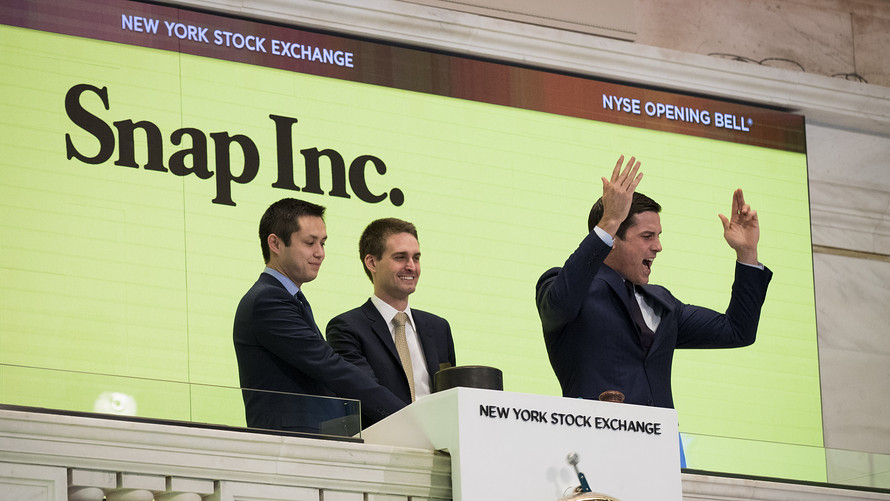
Snap Inc. (NYSE: SNAP) remains a battleground stock in 2026. Following its Q1 earnings report on May 6, 2026, investors are digesting a complex mix of solid financial recovery and disappointing strategic setbacks. While the company beat Wall Street expectations on both the top and bottom lines, a cautious Q2 outlook and the abrupt termination of its AI partnership with Perplexity have injected fresh volatility into the SNAP stock price.
This comprehensive analysis covers the latest financial results, technical indicators, fundamental health, and analyst forecasts to help you decide if SNAP is a buy, sell, or hold in current market conditions.
SNAP Stock Q1 2026 Earnings Breakdown: The Good, The Bad, and The Ugly
Snap’s first-quarter performance for 2026 signaled a company in transition. Management has successfully streamlined costs, but revenue acceleration remains harder to come by than bulls had hoped.
The Headline Numbers (Beat)
- Revenue: $1.53 billion (up 12% YoY), beating analyst estimates of $1.52 billion.
- Earnings Per Share (EPS): Adjusted loss of -$0.05, significantly better than the expected -$0.08 loss.
- Adjusted EBITDA: More than doubled year-over-year to $233 million, demonstrating the effectiveness of recent restructuring and cost-cutting measures.
- Free Cash Flow: A robust $286 million, proving Snap can generate cash even while reporting net accounting losses.
User Growth: A Mixed Bag
- Global DAUs: Daily Active Users returned to growth, hitting 483 million (up 5% YoY).
- Regional Divergence: While international growth is surging, the critical North American market saw a decline in users (from 100M to 92M YoY). This is a major red flag, as North American users monetize at a much higher rate ($9.23 ARPU) compared to the global average ($3.17 ARPU).
Strategic setback: The Perplexity AI Split
In a surprise disclosure, Snap announced it has “amicably ended” its $400 million commercial partnership with generative AI startup Perplexity.
- Impact: Investors had priced in potential revenue synergies from this deal for 2026. Its cancellation forces analysts to remove those contributions from their models, directly impacting the Q2 guidance.
Forward Guidance: Why the Stock Dipped
Despite the Q1 beat, SNAP shares fell approximately 7.4% in after-hours trading. The primary culprit was the company’s forward-looking statements.
- Q2 Revenue Forecast: Management projects revenue between $1.52 billion and $1.55 billion. The midpoint ($1.535B) is slightly below the consensus estimate of $1.54 billion.
- Ad Revenue Headwinds: The company cited specific challenges that are dragging on growth:
- Geopolitical Uncertainty: Instability in the Middle East is causing advertisers in that region to pause spending.
- Enterprise Pullback: Large advertisers in North America are growing their spend at a slower rate than anticipated, reflecting broader macroeconomic caution.
Fundamental Analysis: Valuation & Financial Health
Is Snap Inc. fundamentally undervalued at ~$6.00 per share?
Valuation Metrics
- Price-to-Sales (P/S): Snap trades at a P/S ratio of roughly 3.5x, significantly lower than peers like Meta Platforms (META) or Pinterest (PINS). This discount reflects the market’s skepticism about its long-term profitability.
- Cash Position: The balance sheet is a fortress. Snap ended the quarter with $2.8 billion in cash, cash equivalents, and marketable securities. This liquidity provides a runway to invest in AR “Specs” without immediate dilution risk.
Path to Profitability
- Gross Margins: Adjusted gross margin improved to 57% (up from 53% YoY).
- Cost Discipline: Operating cash flow doubled to $327 million. The company is proving it can run leaner, but it now needs to prove it can grow profitably rather than just cut costs.
Technical Analysis: Chart Patterns & Key Levels
As of May 6, 2026, SNAP stock is trading in a volatile range. Technical indicators present a mixed picture for short-term traders.
- Current Price: ~$6.11 (Post-earnings volatility expected).
- Support Levels:
- $6.03: Immediate support from accumulated volume. A break below this could see the stock test $5.20.
- $5.43: Projected short-term low by May 10th if bearish momentum continues.
- Resistance Levels:
- $6.17: The first major hurdle. Breaking this level is crucial for a bullish reversal.
- $6.32: Upper trend line resistance.
- Indicators:
- RSI (14-day): Neutral to Sell (~44.5), indicating the stock is not yet oversold but lacks buying momentum.
- MACD: Currently issuing a sell signal, suggesting bearish momentum is building in the near term.
Verdict: The technicals suggest a “Hold” or “Accumulate” strategy. The stock is near the bottom of its recent channel, offering a decent risk/reward ratio for long-term investors, but short-term downside risk remains high.
Analyst Sentiment & Price Targets 2026
Wall Street remains deeply divided on Snap’s future. The consensus rating is firmly a “Hold”.
- Average Price Target: $7.93 (Implies ~30% upside from current levels).
- Bull Case: Analysts from firms like Barclays and Rothschild & Co have recently upgraded the stock, citing ad platform improvements and valuation support. They believe the “worst is over” regarding privacy changes.
- Bear Case: Skeptics point to the North American user decline and the failure of the Perplexity deal as signs that Snap is losing relevance against TikTok and Instagram Reels.
- Activist Pressure: Reports of Randian Capital pushing for a board refresh could act as a catalyst, potentially forcing management to accelerate monetization or consider strategic alternatives.
Future Catalysts: What to Watch
- Snapchat+ Subscriptions: This has been a bright spot, with revenue growing rapidly. Continued adoption here proves users value the platform enough to pay.
- Augmented Reality (AR) & “Specs”: Snap expanded its collaboration with Qualcomm to power future AR glasses. While this is a long-term play, any successful hardware launch could re-rate the stock as a tech innovator rather than just a social media app.
- SME Advertiser Growth: Dynamic Product Ads revenue grew 30% YoY. Snap’s ability to court small-to-medium businesses (SMEs) is critical to offsetting the weakness from big brands.
Conclusion: Buy, Sell, or Hold?
Snap Inc. is a “Show Me” stock.
- Buy if: You have a high risk tolerance and believe in the long-term potential of Augmented Reality. The $6.00 level has historically been a strong floor, and the valuation is cheap relative to sales.
- Hold if: You are already invested. The balance sheet is safe ($2.8B cash), and Free Cash Flow is positive. Selling now would mean exiting at cyclical lows.
- Sell if: You are concerned about the decline in North American users. If Snap cannot reverse this trend in Q2 or Q3, the stock could remain dead money for the rest of 2026.
Frequently Asked Questions (FAQ)
1. Why did SNAP stock drop after Q1 2026 earnings?
Although Snap beat earnings estimates, it issued cautious revenue guidance for Q2 ($1.52B-$1.55B) and announced the end of its AI partnership with Perplexity, which disappointed investors looking for AI-driven growth.
2. Is Snap Inc. profitable in 2026?
Snap is Free Cash Flow positive ($286M in Q1) and has positive Adjusted EBITDA ($233M), but it still reported a GAAP net loss of $89 million. It is getting closer to GAAP profitability but isn’t there yet.
3. What is the price prediction for SNAP in 2026?
Most analysts have a price target between $7.90 and $8.00 for the next 12 months. Bullish forecasts go as high as $10.00, while bearish targets sit near $5.25.
4. Who are Snap’s biggest competitors?
Snap faces intense competition from Meta Platforms (Instagram/Facebook) and TikTok for user attention and advertising dollars.
Disclaimer: This article is for informational purposes only and does not constitute financial advice. Always conduct your own research or consult a financial advisor before making investment decisions.
About The Author
