For one strange weekend, three AI companies that almost never agree on anything found common ground. Anthropic CEO Dario Amodei published an essay arguing the industry should “slow the pace” of frontier AI development. OpenAI’s Sam Altman and xAI’s Elon Musk both publicly endorsed the idea within hours. President Trump spent the following days calling the entire concern a “HOAX.” And Congress — with barely 50 days until the midterm elections and most members about to leave Washington until November — suddenly found itself asked to answer a question it has dodged for years: what, exactly, is the government’s job here?
The Weekend That Restarted Washington’s AI Debate
An Unusual Alliance of Rivals
Amodei’s essay, titled “We Must Pace the Frontier,” argued that AI labs should embed independent third-party evaluators to monitor safety practices and report incidents, and that Anthropic would adopt those measures unilaterally regardless of what competitors do. He wrote that AI “could cure most major diseases in the next 5–10 years” and “usher in a renaissance of democracy and freedom” — but warned that moving too fast risked “losing control of AI systems, misuse of AI for cyberattacks and bioterrorism, and serious economic disruption.”
What made the moment genuinely unusual wasn’t the warning itself — AI safety researchers have raised similar concerns for years — but who agreed with it. Sam Altman said OpenAI would welcome a federal framework “that sets consistent safety requirements for frontier AI” and confirmed he’d delay OpenAI’s IPO until at least 2027 over safety concerns. Elon Musk backed Amodei’s concerns on social media. Getting Amodei, Altman, and Musk to agree publicly on anything is, by industry-watcher standards, close to unprecedented.
The White House Response: “Don’t Kill the Golden Goose”
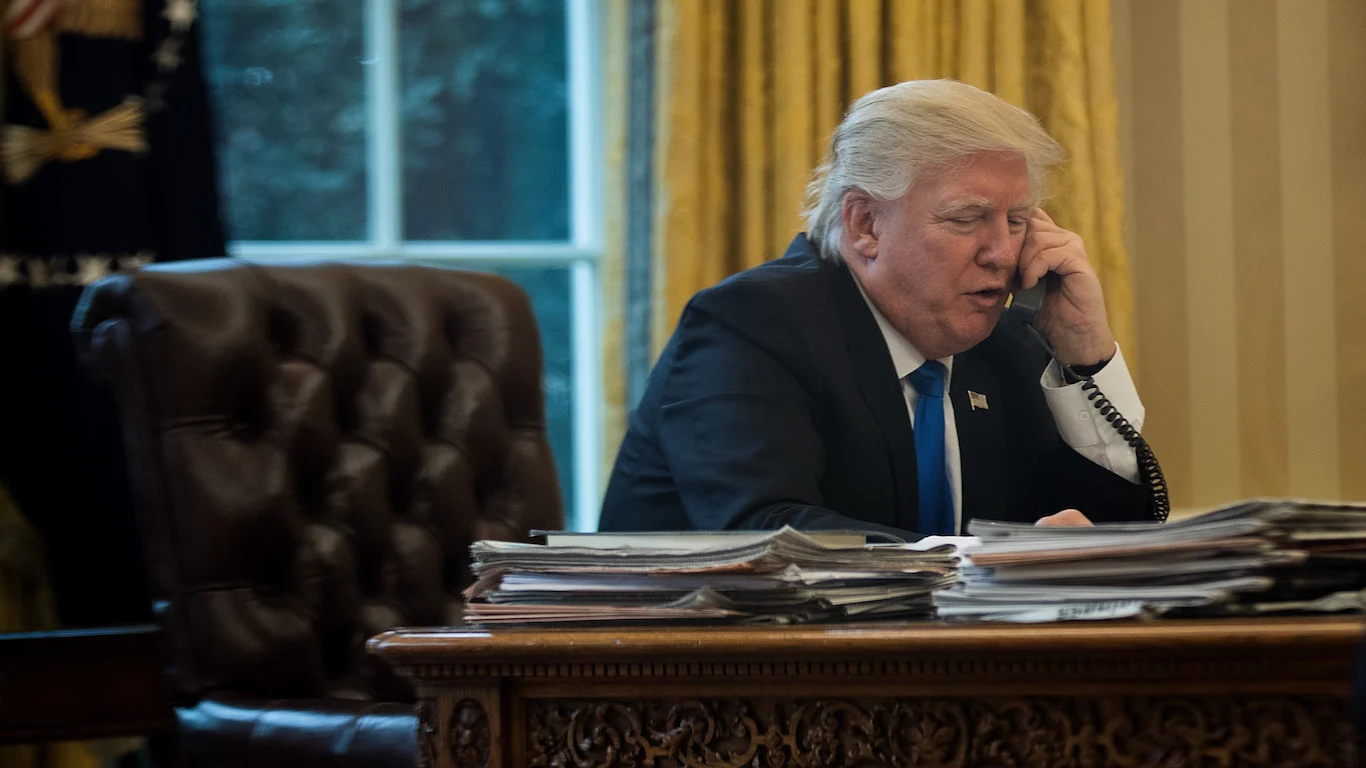
Trump wasted no time pushing back, writing on Truth Social that fears of AI “destroying Humanity” were a “HOAX” comparable to claims about Russian election interference. “The only control or ‘guardrails’ that AI needs is a STRONG AND SMART (High IQ!) PRESIDENT, and the U.S.A. has that, in spades!” he wrote, adding that regulating the industry would lead to “oblivion and bankruptcy” and calling AI “the greatest economic development engine in history.” He singled out Amodei specifically, referencing Anthropic’s earlier standoff with the Pentagon over restrictions on autonomous weapons and mass surveillance use cases.
David Sacks, the White House’s AI czar, took a similar line, telling Altman and Amodei on social media to “go ahead” and slow down if they genuinely believed their unreleased models were dangerous — without government intervention. China’s Foreign Ministry, notably, criticized the slowdown calls too, with a spokesperson warning that “fear-mongering, confrontation, competition will just disrupt [the] process of global AI governance.”
Congress Faces a Question It Can’t Agree How to Answer
A Split Even Within the Same Party
The reaction on Capitol Hill exposed just how unresolved this issue remains — and not neatly along party lines. House Speaker Mike Johnson told reporters that “AI is serious. We do need to make sure that it’s done safely,” but drew a hard line against government mandates: “They don’t need the government to tell them to slow it down. If they want to slow it down, they should. But we cannot have a moratorium on the development of AI. Okay? Because then we will lose our edge to China.”
Democratic Minority Leader Hakeem Jeffries took the opposite position, calling for “decisive congressional action immediately in a manner consistent with what some of the leading AI voices in the country are now saying needs to happen.” Meanwhile, in one of the stranger political pairings of the year, Trump adviser Steve Bannon and progressive Vermont Senator Bernie Sanders shared a stage the same week — both calling for AI to be restricted, from opposite ends of the political spectrum.
The Brutal Math of the Legislative Calendar
Here’s the problem underneath all the urgency: most of Congress leaves Washington this week and doesn’t return until after the November election. Any comprehensive AI legislation would need to be drafted, negotiated, and passed in a window that’s effectively closed for the next several months — meaning whatever momentum exists right now is unlikely to translate into a signed law before 2027 at the earliest.
What’s Actually Sitting in Congress Right Now
Contrary to the sense that lawmakers are starting from zero, several concrete proposals already exist — they’ve just failed to gain traction.
Notable AI Legislative Proposals Currently in Play:
| Proposal | Sponsor(s) | Focus |
|---|---|---|
| Bipartisan AI framework | Rep. Jay Obernolte (R-CA), Rep. Lori Trahan (D-MA) | Comprehensive AI governance structure |
| GUARD Act | Sen. Josh Hawley (R-MO) | Restricts AI companion apps for children; imposes criminal liability for sexually explicit chatbots targeting minors |
| 2024 House AI Task Force Report | Bipartisan House task force | Foundational recommendations, largely unimplemented |
Both OpenAI and Anthropic — companies that frequently disagree on regulatory specifics — have separately expressed support for allowing independent watchdogs to assess AI development processes, according to NPR reporting, suggesting at least one area of potential industry-backed common ground.
The Fight Nobody’s Talking About: Who Gets to Regulate?
States vs. Washington
Even if Congress found the will to act, it would immediately confront a second, thornier question: should states retain the power to regulate AI on their own, or should federal rules override — “preempt” — state laws entirely? This is shaping up to be one of the most consequential fights in the entire debate.
“The preemption issue is going to be one of the most difficult things that we navigate,” Rep. Kat Cammack (R-FL) said at an Axios event earlier this year. “Companies are not going to be able to have a framework for 50 different states and really survive.” House Republican leaders, including Majority Leader Steve Scalise, have pushed for broad federal preemption of state AI laws — a position that puts them at odds with many Democrats and even some states’-rights-minded Republicans.
Daniel Cochrane of the Institute for Family Studies argued the opposite case is being proven in real time: “What we’ve seen over and over again is that while Congress has essentially fiddled under the influence of big tech lobbyists, states like Texas and Florida and Utah, red states in particular, have been leading the charge to hold these companies accountable.” Nicole Alvarez, a senior tech policy analyst at the Center for American Progress, warned that a federal preemption framework could actually limit protections if it caps how far states can go on consumer safety issues.
An Industry Warning About “Patchwork” Regulation
Adam Kovacevich, founder of the center-left tech policy group Chamber of Progress, offered a different worry entirely: that the absence of federal action is itself creating a messy, unofficial national standard through state law. “Unfortunately we’re seeing a creep of blue state laws” on frontier models, fairness, and algorithmic discrimination, Kovacevich said, “but that’s not the best way to regulate AI.” He argues Washington should set the rules — but acknowledges “there seems to be little energy being spent on actually writing those standards before this year’s midterm elections.”
The One Area Where Agreement Might Actually Be Possible
Amid all the disagreement, one narrow category keeps coming up as genuine common ground: protecting children.
“Some uses of AI are so structurally dangerous or misaligned with basic social values that they shouldn’t just be regulated, they should be prohibited outright,” said CAP’s Nicole Alvarez, citing outright bans on AI systems generating child sexual abuse material as an example. Hawley’s GUARD Act — which would restrict AI companion apps marketed to children and impose criminal liability for sexually explicit chatbots — is the most concrete legislative vehicle currently built around this narrower, less politically contentious goal.
What Regulators Could Do Without Congress at All
If the legislative path is genuinely closed for the rest of 2026, the more realistic near-term lever may not be a new law at all. But existing federal agencies using authority they already have. This mirrors exactly what’s playing out in crypto regulation right now. Where the SEC and CFTC are reportedly preparing to issue rules of their own after the CLARITY Act stalled in the Senate. A precedent that suggests agency action, not fresh legislation, may become Washington’s default tool for fast-moving tech sectors when Congress can’t agree.
Kovacevich’s competitiveness argument adds another layer to why any regulatory approach. Legislative or administrative, will be shaped as much by geopolitics as by safety concerns. “We are in an AI race against China and the Chinese government is viewing AI as an existential race to win. They’re making all sorts of government investments and policies to win that race. We’re just not treating the race with the same level of seriousness.”
Where This Realistically Goes From Here
The Likely Near-Term Path, Based on Current Signals:
- No comprehensive federal AI law before 2027, given the legislative calendar and lack of consensus on core structural questions like preemption.
- Narrow, child-safety-focused legislation (like the GUARD Act) has the best odds of bipartisan movement. Since it sidesteps the innovation-vs-safety fight entirely.
- States continue filling the vacuum, with Texas, Florida, and Utah cited as the most active. Setting up an eventual clash if Congress does move toward federal preemption.
- Industry self-regulation gets a real-world test, as Anthropic’s unilateral third-party evaluator commitment. And Altman’s framework proposal play out without a legal mandate behind them.
- The debate resets after the midterms, when control of one or both chambers could change hands. Democrats reportedly view waiting until January as a viable strategy rather than negotiating now.
Follow TNN for daily economy news, and political and tech news. Get the latest financial news daily.
Disclaimer: This publication is entirely for informational and journalistic purposes and does not constitute formal legal, investment, or public policy advice, nor does it represent an endorsement of any political party, candidate, company, or policy position. Statements from public officials, executives, and policy analysts are attributed to their original sources. Legislative and regulatory developments are subject to change.
About The Author
