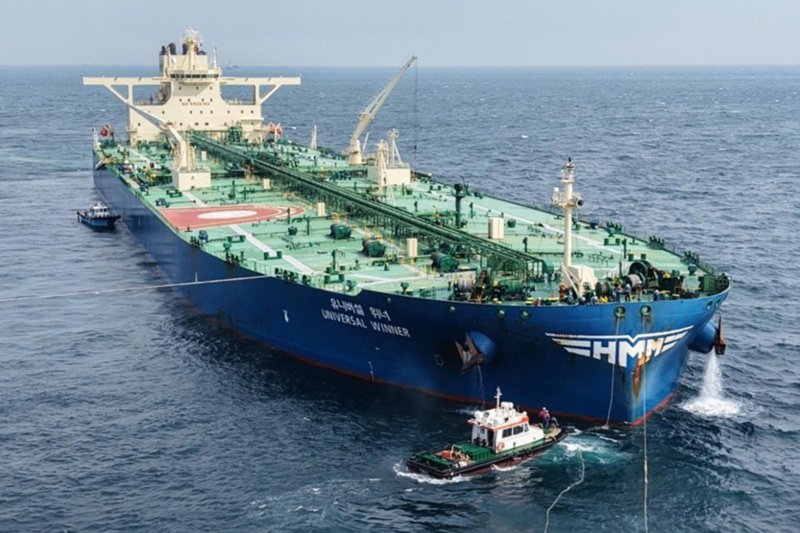
Oil Price Update — The oil market is pricing in a peace deal that hasn’t been fully implemented — and Tuesday’s session made that tension impossible to ignore. Brent crude briefly fell to $79.96 per barrel on June 16, the first time the international benchmark has traded below $80 since early March — before the Iran war had fully erupted. WTI sank to a daily low of $76.88, its cheapest since March 10. And yet, as of Tuesday afternoon, commercial ships were still not transiting the Strait of Hormuz. The market’s bet on a clean, rapid reopening is running ahead of operational reality by a significant margin — and the gap between those two things is where this week’s greatest trading risk lives.
The Numbers: What Oil Did on Tuesday, June 16
| Benchmark | Tuesday Close / Low | Change |
|---|---|---|
| Brent Crude (Intraday Low) | $79.61 (first < $80 since Mar 3) | -3.85% |
| Brent Crude (Official Close) | $79.97 – $80.19 | -3.6% |
| WTI Crude (Intraday Low) | $76.88 (lowest since Mar 10) | -4.36% |
| WTI Crude (Official Level) | ~$77.23 | -4.36% |
| Two-Day Oil Decline (Mon+Tue) | ~-9 to -10% | Iran deal impact |
| Oil Decline from 2026 Peak | ~-42% from $138 Brent high | Over 10 weeks |
| Pre-War Brent Level (Feb 28) | $65–$70/barrel | Return scenario |
| Goldman Q4 2026 WTI Target | $83/barrel | Already at target |
The critical context: Before the conflict began on February 28, 2026, Brent and WTI futures were trading in the $65–$70/barrel range. At Tuesday’s close, markets have now priced in roughly 70–75% of the full “return to normalcy” pricing — even though the Strait has not materially reopened and the formal signing ceremony isn’t until Friday in Geneva.
What Actually Happened This Week — The Hormuz Timeline
The events that triggered this oil crash are moving faster than most investors realize, and slower than the oil market has priced:
- June 14–15 (Sunday–Monday): Trump announces deal with Iran; posts “Let the oil flow!” on Truth Social. WTI falls 5%. Brent falls 4.5%
- June 16 (Tuesday): Brent breaks below $80 for first time since March. Trump attends G7 summit in Évian-les-Bains, France, declares Hormuz will “completely reopen” on Friday, free of Iranian tolls
- June 16 (G7 Statement): Leaders from the U.S., France, Germany, UK, Italy, Canada, and Japan call the Iran deal “a historic opportunity” and declare “the right to free passage without hindrance and the need to pay tolls is the foundation of international trade”
- June 17 (Today — Breaking): Tanker Trackers, a ship-tracking website using digital data and satellite imagery, confirms Iran’s first crude oil exports in two months have left the Strait — two National Iranian Tanker Company supertankers, “Diona” and “Hero 2”, carrying a combined 3.8 million barrels of crude
- June 19 (Friday): Formal signing ceremony in Geneva; Vice President JD Vance expected to attend; Hormuz “complete reopening” promised
The Tanker Reality: Why Shipping Bosses Aren’t Racing In Yet
Despite Trump’s bullish framing, the world’s largest tanker operators are counseling significant caution:
- Hapag-Lloyd (Germany’s global container shipping giant) welcomed the peace framework but notably said: “We hope that our four remaining ships will be able to pass through the Strait of Hormuz this weekend“ — not today, and with the word “hope” doing heavy lifting
- Frontline CEO (world’s largest tanker operator) stated directly: “What will have to come in place is not just a simple agreement between the relevant countries, but it has to be material and translated into the real situations in the Strait of Hormuz, so that shipping lines can make themselves comfortable to go through”
- 230 loaded oil tankers remain stranded waiting inside the Gulf — the logistics of clearing that backlog alone takes weeks
- As recently as June 9, Trump announced a “strong military response” against Iran due to stalled negotiations, leading to new U.S. airstrikes on Iranian targets — and Iran’s military command declared the Hormuz closure again in response. This happened just one week before the current peace framework
The operational reality in plain terms: Even after the Friday Geneva signing, commercial shipping lines will require:
- Physical security verification — they cannot send $300M+ vessels through without independent confirmation of safe passage
- Insurance clearance — war-risk marine insurance must be formally removed or repriced by Lloyd’s of London
- Flag state guidance — many ships operate under Panama, Liberia, or Marshall Islands flags; those registries must formally advise crews it is safe
- Pilot program confirmation — the first commercial convoys will be watched globally; one incident restarts the cycle
Why Oil May Have Overshot to the Downside — and Why It May Not Have
The case that oil has overshot:
- At $77–$80 WTI, the market has already priced in most of the normalization — but Iranian crude won’t return in meaningful volumes for 60–90 days minimum after reopening
- 230 tankers backed up in the Gulf will draw down Cushing and global inventories before new supply arrives — a physical tightness that should support near-term prices
- Goldman Sachs’ Q4 WTI target is $83/barrel — already above where Tuesday’s market closed
- The U.S. and Iran have given conflicting accounts of what is actually in the deal. These conflicting narratives have created premature market confidence
The case that oil has more to fall:
- Pre-war Brent was $65–$70/barrel — the market hasn’t fully returned there yet. If full normalization occurs, that’s another 12–15% downside for crude from current levels
- Goldman’s own May analysis noted “demand destruction” from the oil shock — some of that reduction in demand is permanent: companies have retooled processes, industrial output shifted, and some consumers have adjusted behavior
- OPEC+ had already agreed to a +188,000 bpd production increase for July before the deal — any Iran normalization layered on top creates a meaningful supply surplus
What Iran’s First Oil Export Means for Markets
The June 17 Tanker Trackers confirmation that “Diona” and “Hero 2” have left the Strait carrying 3.8 million barrels is the first tangible evidence that the deal is being implemented — not just announced. This is a positive catalyst for further oil price softening.
- 3.8 million barrels is approximately 0.039 days of global oil consumption (world uses ~100 million bpd) — the physical impact is near-zero
- The symbolic significance is far larger: it proves the naval blockade has formally opened and tanker operators can begin planning risk assessments for their own convoys
- The formal Geneva signing Friday is the next confirmation; the weekend is when first commercial convoys will attempt passage if all goes well
What This Means for USO, Energy Stocks, and Airlines
| Asset | Impact of Continued Oil Decline |
|---|---|
| USO (WTI ETF) | ~$115–$118 zone if WTI stabilizes $77–$80 |
| XLE (Energy Sector ETF) | 3.6% already lost Tuesday; more at risk |
| XOM / CVX / FANG | Operating margins compress as prices fall |
| Airlines (AAL/DAL/UAL) | 15%+ fuel cost reduction building |
| CPI (June print, due July) | Energy deflation = June CPI significantly lower |
| FOMC (Wednesday) | Lower oil = less pressure on Warsh to hike |
The Iran deal’s most underappreciated market impact is not on oil stocks — it’s on the FOMC. Lower energy prices directly reduce headline CPI. If June’s CPI print (released in mid-July) shows 3.5–3.8% instead of May’s 4.2%, the path to a 2026 rate cut re-opens. And that is the outcome that would most broadly reprice U.S. equities higher.
Disclaimer: This publication is entirely for informational and journalistic purposes and does not constitute formal financial, investment, or legal advice. All market investments carry inherent risks of capital loss. Always complete independent due diligence prior to executing equity trades.
Follow TNN for daily economy news and latest financial news today!
Sources: CNBC Oil Tanker Bosses Cautious, RFERL Iran First Oil Export June 17, Wikipedia 2026 Strait of Hormuz Crisis, Wikipedia Iran War Fuel Crisis, CNBC May Oil Drop 20%, Yahoo Finance Iran Deal Markets
About The Author
