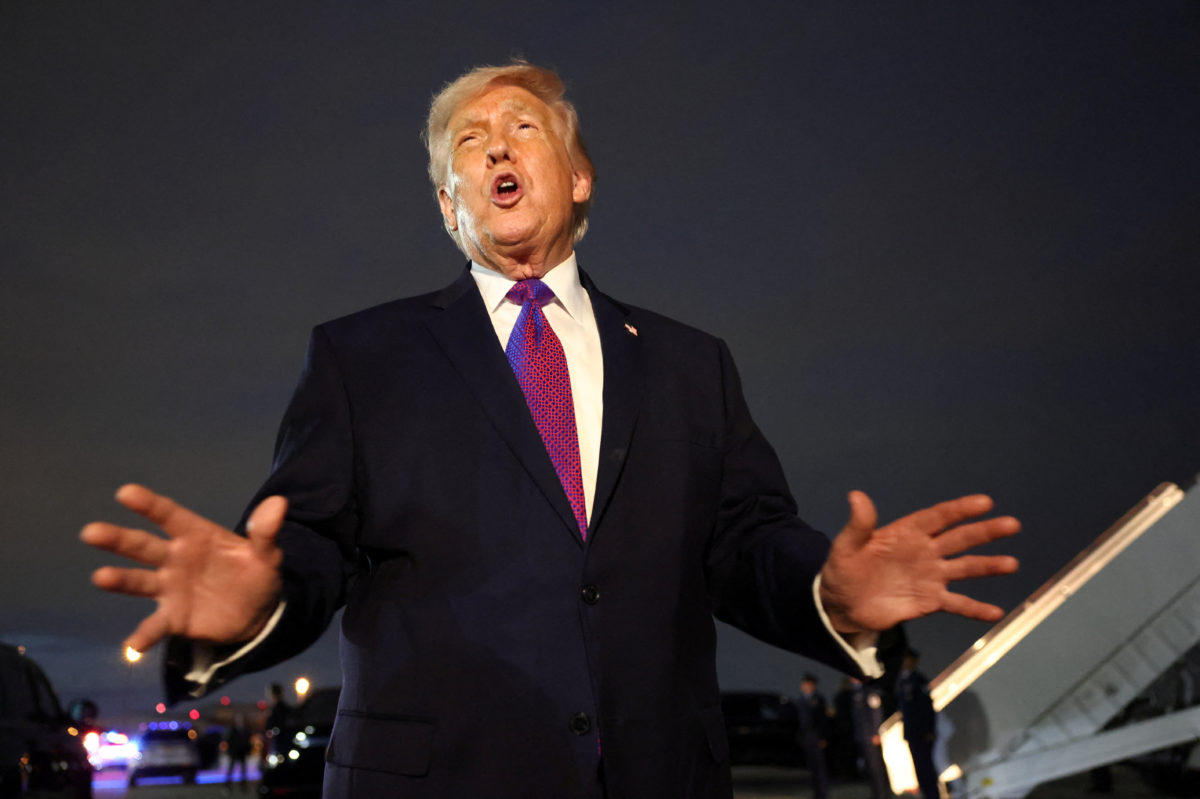
Donald Trump: price of oil rise benefits U.S. Donald Trump
President Trump argued the price of oil rise helps the United States on Thursday, saying the country “makes a lot of money” when global oil costs climb. He posted the comment on Truth Social and framed the energy-price swing as secondary to his goal of stopping Iran from developing nuclear weapons. The primary point from his post: higher oil prices are a financial gain for the U.S., while military action targets a larger security threat.
Price of oil climbs as Brent tops $100
Brent crude, the global benchmark, traded roughly 4.7 percent higher at about $98 a barrel at 8 a.m. EDT Thursday, a day after topping $100 for a second time since the military operation began 12 days earlier. The spike followed disruptions around the region’s shipping lanes, notably the Strait of Hormuz, which remains the chokepoint through which roughly a fifth of the world’s oil flows. Strait of Hormuz
- Brent’s jump to and above $100 reflects both the closure of the waterway and heightened tanker caution.
- Many tankers are avoiding the route, adding to tightness in physical supply.
Price of oil: public concern and polling
Public concern over higher gasoline and energy costs is growing. A Reuters/Ipsos survey found 67 percent of respondents expect gas prices to rise over the next year, while just 11 percent expect improvement. Reuters Ipsos
That sentiment shows up in everyday costs. After a State of the Union mention last month of gas at $2.30 a gallon, the national average later rose sharply — a shift voters notice and discuss. The administration says coordinated releases of strategic oil supplies will help stabilize markets but not permanently lower prices.
Officials and markets react: comments from Chris Wright and Karoline Leavitt Chris Wright Karoline Leavitt
Energy Secretary Chris Wright said on CNN that Americans will likely feel “short-term pain” from energy costs as the U.S. works to remove Iran’s ability to threaten regional stability. He told networks the priority is “defanging Iran’s abilities to threaten American troops… and global energy markets,” and warned that current operations will require time before they ease fuel-price pressure.
The White House indicated an array of policy tools. Press secretary Karoline Leavitt noted the administration might waive Jones Act rules on U.S.-flagged shipping to keep energy products flowing between ports. At the same time, the White House announced plans for a coordinated release of strategic oil — a measure intended to stabilize markets rather than crush prices.
Markets, banks and consultancies sound the alarm Goldman Sachs Oxford Economics Joe Brusuelas RSM
Analysts and institutions warned that sustained higher oil would add to inflation, slow growth and raise unemployment by year’s end. Goldman Sachs indicated higher oil typically pushes inflation up and growth down. Oxford Economics noted recent swings in Brent are “eye-catching” and that volatility will likely persist while no timeline exists for de-escalation and for traffic to return to the Strait of Hormuz.
Commentators also flagged the limits of a strategic reserve release. Joe Brusuelas at RSM said coordinated draws will likely slow the rise in prices and provide temporary relief, but they will not fully reverse the underlying market impact of a disrupted route and heightened geopolitical risk.
A political pivot on energy and optics
The tone from the White House shifted sharply in weeks: from celebrating relatively low gas prices to arguing that higher oil prices have benefits for the U.S. economically and strategically. That pivot reflects a trade-off between domestic pocketbook concerns and a broader military objective — a choice the administration says is worth short-term pain to prevent a longer-term regional threat.
What to watch next
- Whether U.S. naval actions and tanker escorts can restore traffic through key routes.
- The size and coordination of any further strategic reserve releases.
- Consumer sentiment and poll shifts as gasoline prices continue to draw attention.
For ongoing coverage of the price of oil, follow TNN for more updates. Also watch reporting and official statements from Karoline Leavitt and Chris Wright as markets react. Follow TNN for the latest on the price of oil, US news today and Canada news today.
About The Author
