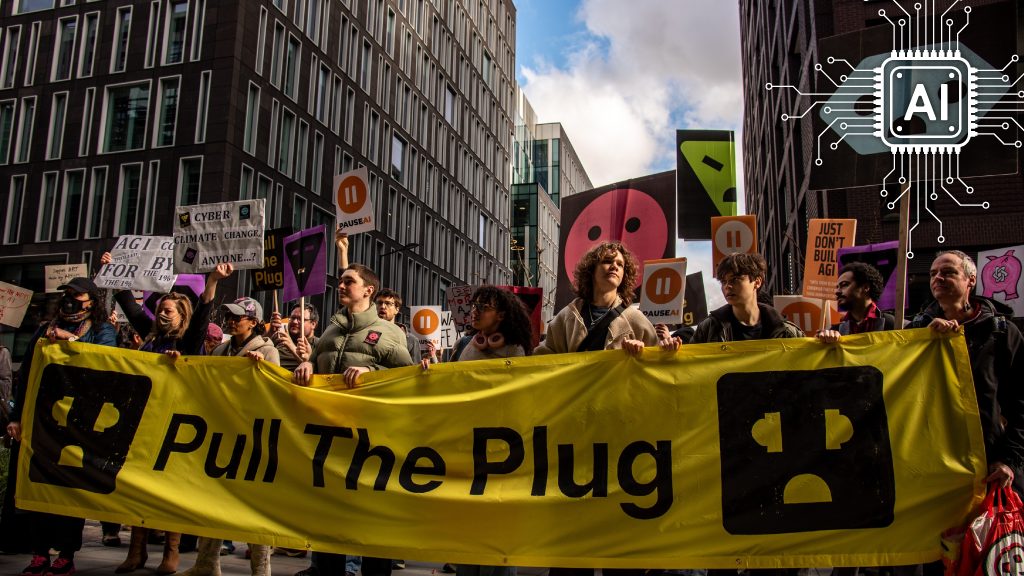
The $7 Trillion Infrastructure That’s Becoming a Political Lightning Rod
The AI infrastructure investment cycle continues to accelerate, with approximately $725 billion expected to be invested during 2026 alone and projections of nearly $7 trillion in cumulative data center investment through 2030.
Alongside this rapid expansion, however, communities across the United States are increasingly questioning the environmental, infrastructure, and economic impacts of large-scale AI data centers.
From Loudoun County, Virginia, to Goodyear, Arizona, and Racine, Wisconsin, local governments and residents are raising concerns over electricity demand, water consumption, tax incentives, and community benefits. As these issues gain political attention, they may introduce new regulatory and financial risks for companies operating or developing AI data centers.
The following five-part framework can help investors evaluate whether an AI infrastructure company may be exposed to increasing voter or regulatory backlash.
Why Voter Backlash Can Become a Financial Risk
Political opposition can directly affect project economics through permitting delays, regulatory changes, and higher operating costs.
Potential risks include:
- Permit denials or extended approval delays for large data center developments.
- Legislative efforts to revise or eliminate long-term tax incentives previously granted to data centers.
- Utility rate disputes as electricity demand increases and additional generation capacity is required.
- Environmental litigation involving water rights or environmental review requirements.
A prolonged delay on a multi-billion-dollar data center project can significantly affect expected operating revenue while increasing capital carrying costs.
The Five-Part Voter Backlash Test
Test 1 – Is the Primary Development Region Located in a Water-Stressed Area?
Modern AI data centers require substantial amounts of water for cooling operations.
A typical 100-megawatt AI data center consumes approximately 360,000 gallons of water per day, roughly equal to the daily consumption of 1,000 single-family homes.
Red Flags
- Facilities located in Arizona, Nevada, New Mexico, or Utah.
- Heavy reliance on groundwater sources.
- Operations located within the Colorado River Basin.
Green Flags
- Facilities located in water-abundant regions such as the Pacific Northwest, Upper Midwest, or Tennessee Valley.
- Closed-loop cooling systems.
- Water Usage Effectiveness (WUE) below 1.0 liters per kilowatt-hour.
How to Evaluate
Investors can review:
- Sustainability reports.
- Regional water withdrawal disclosures.
- Facility locations compared with drought monitoring data.
Companies with more than 30% of their capacity located in severe drought zones may face elevated regulatory risk.
Companies Mentioned
| Company | Observation |
|---|---|
| Oracle | Significant Arizona and Nevada footprint. |
| Withdrew from a planned Oregon facility following water-related objections. |
Test 2 – Is Organized Community Opposition Already Present?
Community opposition can quickly transform a routine permitting process into a prolonged regulatory challenge.
Red Flags
- Active community organizations opposing planned facilities.
- Local elections where data centers become a campaign issue.
- Existing environmental lawsuits.
- Public meetings showing majority opposition.
Green Flags
- Industrial-zoned development sites.
- Community Benefit Agreements (CBAs).
- Early engagement with local communities before permit applications.
How to Evaluate
Investors can examine:
- Local news coverage.
- County planning commission records.
- Public permitting documents.
Current Examples
Virginia
- Loudoun County has experienced organized citizen initiatives opposing additional data center construction.
- Virginia introduced disclosure requirements covering power and water usage.
Wisconsin
- Microsoft secured approval in Racine County after agreeing to more than $100 million in local infrastructure commitments.
Arizona
- Google’s Mesa project received approval despite objections from local water districts and continues to face litigation.
Test 3 – Does the Business Depend on Tax Incentives?
Many AI data centers received long-term tax incentives designed to encourage investment.
These incentives are increasingly receiving political scrutiny as communities evaluate whether expected economic benefits have materialized.
Red Flags
- More than 30% of planned investment located in jurisdictions reviewing tax exemptions.
- Dependence on tax incentive statutes currently under legislative review.
- Operations in states considering changes to data center tax policies.
States mentioned include:
- Virginia
- Arizona
- Georgia
- Illinois
Green Flags
- Facilities developed without relying on tax incentives.
- Community Benefit Agreements providing direct local economic benefits.
How to Evaluate
Investors can review:
- State legislative activity.
- Company 10-K disclosures discussing incentive arrangements.
Example
Amazon Web Services received an estimated $3.8 billion in Virginia tax exemptions over approximately ten years.
Potential future legislative changes could affect long-term operating costs.
Test 4 – How Is Electricity Being Procured?
AI data centers have become major electricity consumers, increasing attention on how facilities obtain power.
Red Flags
- Heavy dependence on behind-the-meter arrangements.
- Reliance primarily on Renewable Energy Certificates (RECs).
- Projects displacing other users within transmission interconnection queues.
Green Flags
- Direct investment in new power generation.
- Market-rate electricity procurement.
- Commitments to 24/7 carbon-free electricity.
How to Evaluate
Investors can examine:
- Sustainability reports.
- Power purchase agreements.
- Utility commission filings.
Companies Highlighted
| Company | Observation |
|---|---|
| Microsoft | Three Mile Island nuclear power purchase agreement with Constellation Energy. |
| Alphabet | Extensive 24/7 carbon-free energy procurement strategy. |
| Chevron Project Kilby | Direct infrastructure investment supporting industrial power supply. |
Areas of Concern
Companies relying primarily on Renewable Energy Certificates purchased away from their consumption locations may face greater scrutiny.
Test 5 – Is Regulatory Approval Concentrated in a Single Area?
Heavy dependence on approvals from a limited number of local jurisdictions can create concentrated regulatory risk.
Red Flags
- Most projects located within one or two counties.
- Operations in states considering data center moratorium legislation.
- Projects requiring extensive environmental approvals.
Green Flags
- Geographically diversified project pipelines.
- Early community engagement before permitting.
How to Evaluate
Investors can compare:
- Investor presentations.
- Infrastructure pipeline disclosures.
- State-level legislation affecting data center development.
Applying the Five-Part Test
| Company | Water Risk | Opposition Risk | Tax Risk | Power Risk | Concentration Risk | Overall Assessment |
|---|---|---|---|---|---|---|
| Microsoft (MSFT) | Medium | Medium | High | Low | Medium | Moderate |
| Alphabet (GOOGL) | Medium | Low | Medium | Low | Low | Low-Moderate |
| Amazon / AWS | High | High | High | Medium | High | High |
| Meta (META) | High | High | High | Medium | High | High |
| CoreWeave (CRWV) | Medium | Low | Low | Medium | Low | Low-Moderate |
| Oracle (ORCL) | High | Medium | Medium | Medium | Medium | Moderate-High |
| Digital Realty (DLR) | Low | Low | Medium | Low | Low | Low |
These rankings represent an application of the five-part framework using publicly available disclosures and reports and are not investment ratings.
What Investors Are Watching
Rather than avoiding AI data center investments altogether, investors may focus on companies that actively manage regulatory and community-related risks.
Three characteristics highlighted in this framework include:
- Community Benefit Agreements established before permit applications.
- Investment in new electricity generation instead of relying primarily on offsets.
- Geographic diversification across multiple regulatory jurisdictions.
The AI infrastructure investment cycle continues to expand, while political and regulatory considerations are becoming an increasingly important part of evaluating long-term investment risk.
Follow TNN for daily stock market news and financial news today.
Disclaimer: This publication is intended solely for informational and journalistic purposes and does not constitute financial, investment, or legal advice. All investments involve risk, including the potential loss of capital. The risk assessment framework presented in this article is based on publicly available information and the author’s analysis and should not be considered a formal ESG rating or investment recommendation. Investors should conduct independent due diligence before making investment decisions. Tax incentive arrangements, regulatory timelines, and legislative developments are subject to change. Consult qualified legal and financial advisers before making investment decisions.
About The Author
