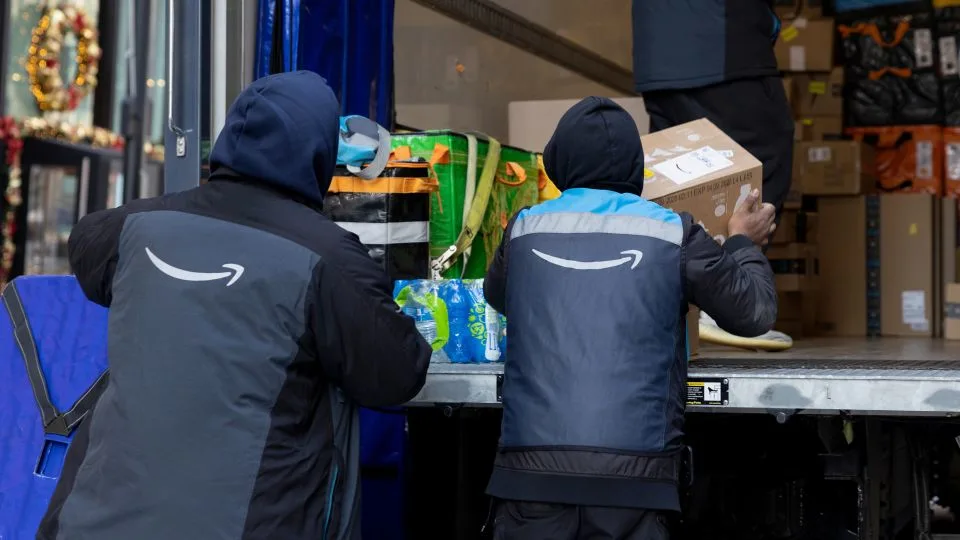
A growing number of Americans are working full-time jobs at some of the country’s biggest companies and still can’t afford groceries or health coverage without government help. A new Government Accountability Office study released Wednesday, July 22, found that Amazon and gig economy workers are leaning on SNAP and Medicaid at a pace that has nearly tripled since 2020 — a stark data point in what’s increasingly being described as America’s affordability crisis.
What the GAO Study Found
The GAO analyzed data from 11 states, home to nearly one-fifth of the U.S. population, comparing conditions from February 2020 to September 2025.
| Metric | 2020 | September 2025 |
|---|---|---|
| Amazon workers on SNAP (11 states studied) | Baseline | ~12,350 |
| Amazon workers on Medicaid (11 states studied) | Baseline | ~11,350 |
| Change in Amazon enrollment | — | Nearly tripled |
| FedEx workers on Medicaid | Baseline | More than tripled |
| FedEx workers on SNAP | Baseline | Nearly doubled |
Beyond Amazon and FedEx, rideshare and delivery platforms including Uber, Lyft, DoorDash, Grubhub, and Instacart are now counted among the top employers of SNAP and Medicaid recipients in several states — a dramatic shift from five years earlier, when gig platforms barely registered in the data. Walmart, meanwhile, remained one of the top employers of benefit recipients in every state examined, a position it also held in 2020.
The National Picture
Zooming out from the 11-state sample, the GAO also reviewed 2024 Census data nationally:
- Nearly 14 million adults who worked at some point in 2024 were enrolled in Medicaid, up from about 12 million in 2020.
- 10.6 million working adults lived in households receiving SNAP benefits, up from roughly 9 million in 2020.
- Most recipients worked full-time schedules, concentrated in five occupations — including transportation and food preparation and serving roles.
Why This Is Trending Now
The report was commissioned by Vermont Sen. Bernie Sanders, who requested both the current analysis and the GAO’s original 2020 study, and it lands at a politically charged moment for safety-net policy.
- “No one who works for a company making billions in profits should be living in poverty,” Sanders said in a statement accompanying the report’s release.
- The findings arrive just as new federal work requirements begin reshaping eligibility for both programs nationwide.
- The timing has turned a wonky federal audit into a flashpoint in the broader debate over whether major employers are shifting labor costs onto taxpayers.
Amazon and Walmart Push Back
Both companies disputed the framing of the report’s conclusions.
- Amazon spokesperson Rachael Lighty said eligibility for SNAP and Medicaid “is based on total household income and family size, not individual wages or benefits,” arguing that companies offering part-time schedules — which Amazon does — will naturally show more workers who qualify for assistance regardless of hourly pay.
- Amazon pointed to a $1 billion investment announced in late 2025 aimed at raising pay and lowering health-care costs for its U.S. fulfillment and transportation workforce, which pushed average base pay above $23 an hour and total compensation with benefits to roughly $30 an hour.
- Walmart, the nation’s largest private employer, said it has raised starting wages for associates by 93% since 2015; associates now earn $18 an hour on average.
Not everyone reads the data as an indictment of employer pay, either. Peter Earle, senior director of research at the free-market American Institute for Economic Research, argued the pattern may partly reflect people already on Medicaid picking up gig work on the side. “In other words, they’re people on Medicaid who earn extra bucks by ride-sharing or doing deliveries when they can,” he said. “It makes sense that they would enroll in Medicaid because that program was made for people like them.”
Policy Backdrop: New Work Requirements Are Already Kicking In
The GAO report lands as eligibility rules for both programs are tightening under the One Big Beautiful Bill Act, which President Trump signed into law last summer.
| Policy Change | Status |
|---|---|
| Expanded SNAP work requirements | Already in effect; advocates say millions have lost benefits |
| First-ever federal Medicaid work mandate | Begins January in most states |
| Work/volunteer/training threshold | At least 80 hours per month |
| New Jersey employer Medicaid assessment (50+ full-time workers on Medicaid) | Took effect July 1, 2026; $325–$725 per employee/dependent annually |
Supporters of the new work requirements argue they’ll push low-income Americans toward greater self-sufficiency, while critics warn the rules will primarily result in more people going hungry or uninsured rather than working more. Separately, the law curtails federal funding for both programs, prompting states like New Jersey to look for new revenue — in its case, by directly billing large employers whose workers rely on Medicaid.
Income Thresholds: Who Actually Qualifies
To put the eligibility rules in context:
- SNAP: Applicants generally must earn less than 130% of the federal poverty level — about $42,000 a year for a family of four (some states set higher limits).
- Medicaid: Recipients typically can’t exceed 138% of the federal poverty level, or about $22,000 for an individual, though states that didn’t expand Medicaid under the ACA often use lower thresholds.
What to Watch Next
- January 2026 Medicaid work mandate rollout: How many working gig and warehouse employees lose coverage once the federal work-hour requirement takes effect will be one of the clearest early tests of the new policy’s real-world impact.
- More state-level employer assessments: If New Jersey’s Medicaid assessment model proves politically popular, other states facing similar funding gaps could adopt comparable employer levies.
- Corporate wage responses: Watch for whether Amazon, Walmart, or major gig platforms make further public wage or benefits announcements in response to continued scrutiny, as Amazon did with its late-2025 pay investment.
Sector Sentiment Snapshot
For investors, this story sits at the intersection of labor-cost risk and regulatory exposure for large-cap retail, logistics, and gig-economy names. While the GAO report itself isn’t a market-moving catalyst, it feeds into a broader narrative — rising minimum-wage pressure, potential new state-level employer levies, and continued political scrutiny of major employers — that could gradually pressure margins at labor-intensive companies if similar assessments spread beyond New Jersey.
Follow TNN for daily stock market news and financial news today.
Disclaimer: This publication is entirely for informational and journalistic purposes and does not constitute formal financial, investment, or legal advice. All market investments carry inherent risks of capital loss. Always complete independent due diligence prior to executing equity trades.
About The Author
