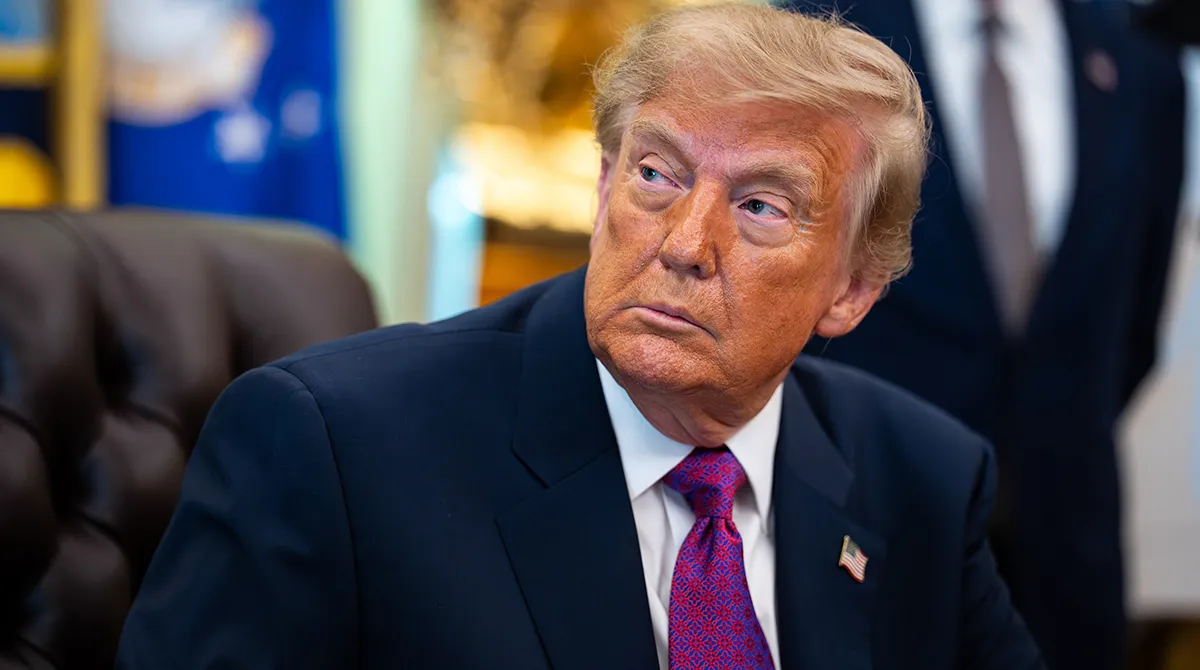
President Trump is set to meet with U.S. oil refiners and fuel distributors at the White House on Tuesday, September 1, in the administration’s latest attempt to bring down gasoline prices heading into the midterm elections. The meeting lands just days after Trump announced what he called the “biggest oil deal in world history” with Venezuela. An agreement he says will “substantially lower gas prices” for Americans. But energy analysts, oil traders, and even the mechanics of the U.S. Strategic Petroleum Reserve itself are raising serious doubts about whether that promise can be kept anytime soon.
Today’s Market Snapshot
- Gasoline prices: The national average sits at roughly $4.08 to $4.10 a gallon, according to AAA. Nearly 90 cents higher than a year ago and up more than a dollar since the U.S.-Iran conflict began.
- Crude oil: West Texas Intermediate and Brent crude both rose more than 2% on Monday, driven by renewed U.S.-Iran hostilities after American forces struck Iran’s Larak Island and Iran retaliated against U.S.-linked bases.
- Strategic Petroleum Reserve: Sitting at its lowest level since November 1982. When the SPR was first being filled under President Reagan. Now at roughly a third of its 714-million-barrel authorized capacity.
- Political backdrop: A Reuters/Ipsos poll conducted in early August found nearly half of Americans cite the cost of living as their top voting issue. With 70% disapproving of how Trump has handled it.
Who’s in the Room Tuesday — and Who Isn’t
The White House confirmed the meeting will bring together representatives from small, medium, and large refiners and fuel distributors. Alongside Interior Secretary Doug Burgum, Energy Secretary Chris Wright, and National Energy Dominance Council Executive Director Jarrod Agen. According to a White House official, the session will focus on near-term, concrete steps to expand domestic refining capacity, examine whether recent cost declines in the supply chain are actually reaching consumers, and weigh additional actions to bring down prices at the pump.
One notable absence: Reuters reported that ExxonMobil, the country’s third-largest refiner, was not invited. The snub follows a public rift between Trump and Exxon earlier this year, after CEO Darren Woods called Venezuela “un-investable” given the country’s history of asset seizures and legal uncertainty. Trump pushed back forcefully at a January meeting with oil executives following the U.S. raid that captured former Venezuelan leader Nicolás Maduro, telling the room, “You have total safety,” and framing the opportunity as one where major oil companies would spend “at least $100 billion of their money” to develop Venezuelan reserves.
Why Refining Capacity Is the Real Bottleneck
Tuesday’s meeting centers on a structural problem that’s arguably bigger than crude supply itself: U.S. refining capacity has barely changed in roughly 40 years even as domestic oil production has expanded dramatically. Refiner Valero estimated earlier this month that the wars in Iran and Ukraine have together removed about 5 million barrels per day of global refining capacity — a supply crunch that’s kept gasoline prices elevated even as crude oil prices have softened at various points this year.
The Venezuela Deal: What Was Actually Announced
Trump’s Friday announcement centered on a joint venture in which the U.S. government would take a 55% stake alongside a private Venezuelan company. Covering 17 oil fields and roughly 65 billion barrels of proven reserves still in the ground. On Truth Social, Trump described the agreement as the biggest oil deal in world history and said it would substantially lower gas prices for American taxpayers. Vice President JD Vance separately argued Monday that the U.S. is already seeing a “significant increase in oil production out of Venezuela,” though he did not offer specifics on timing.
Why Energy Experts Are Skeptical
The reaction from independent energy analysts has been consistently cautious, bordering on dismissive, about any near-term price impact:
| Expert | Organization | Assessment |
|---|---|---|
| Gerald Kepes | Competitive Energy Strategies | Called the idea that the deal affects gas prices “now” absurd |
| Francisco Monaldi | Rice University Center for Energy Studies | Said a significant production increase is unlikely in the near term |
| Tom Kloza | Gulf Oil (Chief Energy Adviser) | Said it won’t lower gasoline, diesel, or jet fuel prices over “the next five days, five weeks or five months” |
The core issue is development timelines.
The bulk of the Venezuelan oil fields covered by the agreement have yet to be developed at any meaningful scale. Meaning production increases large enough to move global or domestic prices are, by most industry estimates, several years away at minimum.
The SPR Complication Nobody’s Talking About
Trump has also promised that Venezuelan crude will help “fill up” the Strategic Petroleum Reserve, describing a “topping out” process he said would begin “very shortly.” But the mechanics of that plan face a genuine technical obstacle: most of Venezuela’s proven reserves are extra-heavy crude oil, which the U.S. Energy Information Administration has previously concluded isn’t cost-effective to store in the SPR. UBS strategists echoed that concern, noting the mechanism for using future Venezuelan output to replenish the reserve remains unclear given the mismatch in crude quality and storage requirements between what Venezuela produces and what the SPR is built to hold.
That distinction matters because the SPR was established specifically as a light, sweet crude reserve. And retrofitting it — or the broader U.S. refining system. To handle extra-heavy Venezuelan crude at scale is not a simple substitution.
A Pattern of Pressure on the Oil Industry
Tuesday’s meeting is the latest chapter in a monthslong effort by the administration to publicly pressure energy companies over pump prices, predating the Venezuela deal entirely:
- In June 2026, Trump directed the Justice Department to investigate oil companies for not lowering retail prices in step with falling crude costs. Accusing the industry of “gouging” consumers.
- The administration has been tapping the Strategic Petroleum Reserve throughout the year to help push down gasoline prices as Middle East disruptions from the Iran conflict pushed costs higher.
- U.S. forces have seized several tankers linked to Venezuelan oil in recent weeks. The White House confirmed a fifth such seizure on the same day as Friday’s oil-executive meeting.
What to Watch Next
- Whether Tuesday’s meeting produces concrete refining-capacity commitments, as opposed to general statements of intent. The White House has specifically framed the goal as “concrete, near-term steps.”
- Oil price direction amid the Iran conflict, which remains the dominant near-term driver of both crude and gasoline prices. Arguably overshadowing the Venezuela deal’s long-term supply potential.
- Midterm-cycle messaging, given that affordability has become a central political vulnerability for the administration, with the gap between promised relief and delivered relief likely to remain a recurring storyline through the fall.
Sector Sentiment Snapshot
Energy markets have shown limited near-term reaction to the Venezuela announcement itself. Both WTI and Brent crude actually rose rather than fell in the days following the deal. With traders focused far more on escalating U.S.-Iran hostilities than on a Venezuelan supply story that most analysts view as a multi-year proposition. That divergence between the administration’s messaging and the market’s actual pricing behavior is likely to remain the central tension around this story in the weeks ahead.
Follow TNN for daily stock market news and financial news today.
Disclaimer: This publication is entirely for informational and journalistic purposes and does not constitute formal financial, investment, or legal advice. All market investments carry inherent risks of capital loss. Always complete independent due diligence prior to executing equity trades.
About The Author
