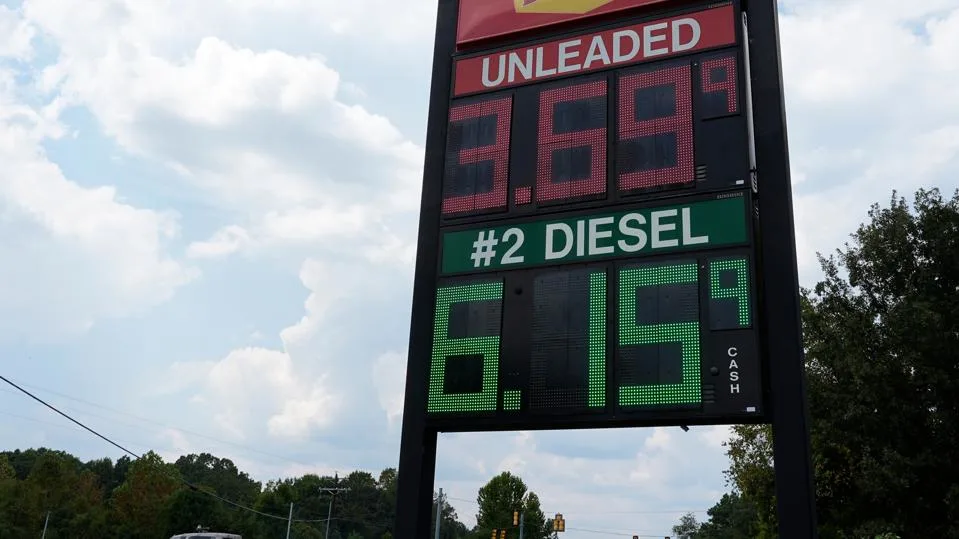
There’s a two-month lag between what happens at the diesel pump and what shows up on your grocery receipt, and right now that lag is about to run out. The national average price of diesel — the fuel that moves nearly every truckload of food in America from farm to warehouse to store shelf — has climbed to a record $6.53 a gallon, up from just $3.75 a year ago. With Thanksgiving less than two months away, economists say the timing could not be worse for the one meal Americans build their entire fall grocery budget around.
How Diesel Got This Expensive, This Fast
Diesel’s Record-Breaking 2026, By the Numbers:
| Date | National Average | Year-Ago Price | % Increase |
|---|---|---|---|
| Late February 2026 | ~$3.76 | — | Baseline (war begins) |
| September 4, 2026 | $5.85 | $3.71 | +58% |
| September 11, 2026 | $6.05–$6.06 | $3.70 | +64% |
| September 21, 2026 | $6.51–$6.53 | $3.75 | +74% |
| California (Sept. 21) | $8.42 | $5.16 | +63% |
The national average for on-highway diesel reached $6.529 a gallon in the week of September 21 — the highest figure in the U.S. Energy Information Administration’s weekly data series, which stretches back to 1994. That’s not a typo: diesel has now set a new all-time record roughly every week since early September, according to GasBuddy, which flagged it as the third record in a single week back on September 11 alone.
The Iran War Is the Root Cause
The driver behind all of this is the ongoing war between the U.S., Israel, and Iran, which began in late February 2026. Diesel prices have soared as the conflict disrupts tanker traffic through the Strait of Hormuz, a critical chokepoint for global oil shipments. Much of the world’s crude oil flows to Asia, where refineries — particularly in China — are producing less diesel than usual because of shipping disruptions tied to the conflict. The United States is technically a net exporter of diesel, but that doesn’t insulate American drivers and businesses from a global price that’s set by worldwide supply and demand.
This is also directly connected to the same oil-price surge we’ve been tracking through the Iran conflict’s impact on markets — Brent crude pushing back toward $110 a barrel after President Trump rejected an Iranian peace proposal this week, a story that’s been rattling both energy prices and Wall Street simultaneously.
Why Diesel Moves Almost Everything You Buy
Here’s the part that trips a lot of people up: most Americans don’t drive diesel vehicles, so it’s easy to assume record diesel prices are somebody else’s problem. They aren’t.
Where Diesel Shows Up in Your Food Supply Chain:
- Farm equipment. Tractors, combines, and harvesting machinery overwhelmingly run on diesel — meaning higher fuel costs hit food production before a single truck even leaves the farm.
- Long-haul trucking. The vast majority of groceries travel by diesel-powered semi-truck at some point between the farm or processing plant and your local store.
- Rail freight. Railroads, which move enormous volumes of bulk agricultural commodities, also run predominantly on diesel.
- Refrigerated transport. Perishable foods — meat, dairy, produce, seafood — require refrigerated trucking, which is more fuel-intensive and therefore more exposed to diesel price swings than shelf-stable goods.
A chief commercial officer for Norfolk Southern railroad noted at a recent Morgan Stanley conference that diesel in California was already $8 a gallon, and warned that higher fuel costs typically show up “in grocery prices, delivery fees, and anything seasonal that depends on trucking to move fast” — usually a few weeks after the price spike itself, once fuel surcharges work their way through supply contracts.
The Two-Month Lag: Why You Haven’t Felt the Full Impact Yet
This delay is the single most important thing to understand about how diesel prices translate into grocery costs. Trucking and shipping contracts typically don’t reprice instantly — they adjust through fuel surcharges that “take hold” over weeks, not days. That means the diesel spike that started in earnest back in early September is only now beginning to show up meaningfully in shelf prices, and the worst of it may still be ahead as we head into peak holiday shipping season.
Early Warning Signs Already Visible in July Data:
| Category | Price Increase (July) | vs. Overall Grocery Inflation |
|---|---|---|
| Seafood | +7% | Well above average |
| Fresh Fruit | +4.9% | Well above average |
| Overall Grocery Inflation (trailing 12 months) | +3.4% | Baseline |
Seafood and fresh fruit — both categories that depend heavily on refrigerated, time-sensitive transport — were already running hot in July, months before diesel even hit its most recent records. The grocery industry’s own trade group has warned that high diesel prices are raising costs throughout the entire food supply chain, and economists widely expect the pattern to continue, not reverse, in the months ahead.
What This Means for Your Thanksgiving Table Specifically
Last Year’s Baseline
A classic Thanksgiving dinner for 10 people — turkey, stuffing, sweet potatoes, dinner rolls, frozen peas, cranberries, celery, carrots, pumpkin pie mix and crust, whipping cream, and milk — cost an average of $55.18 last year, or about $5.52 per person. A 16-pound turkey alone averaged $21.50.
Why Nearly Every Item on That List Is Exposed
Look closely at that ingredient list and a pattern emerges: fresh cranberries, celery, and carrots, frozen peas, whipping cream, milk, and the turkey itself all have to stay cold during shipping — meaning every one of them depends on the same diesel-powered refrigerated trucking that’s absorbing this year’s fuel-cost spike. Even before this year’s diesel records, fresh vegetables and dairy were already two of the categories that got substantially more expensive in last year’s Thanksgiving cost survey — this year’s diesel shock is landing on top of an already-elevated baseline.
The Turkey-Specific Forecast:
The USDA has already raised its 2026 turkey price forecast by 4.3 cents per pound while simultaneously lowering its estimate of how much turkey will actually be produced this year — a combination that typically points toward higher prices, not lower ones, heading into the holiday. Overall grocery prices are already up 3.4% over the past year, and the USDA expects grocery prices to continue rising through the rest of 2026.
It’s Not Just Groceries — The Ripple Effects Are Everywhere
Diesel’s reach extends well beyond the supermarket. Delivery companies have already begun adding fuel surcharges to online orders and packages, according to reporting on the broader economic impact of the price spike. Construction is especially exposed too, since the heavy machinery used to move commodities like cement and gravel is almost universally diesel-powered — and unlike retailers, construction firms often can’t simply pass costs through if they’re locked into contracted pricing.
Public transit systems are feeling it directly as well: Rhode Island’s public transit authority saw its diesel costs blow past budget after a fuel price lock expired in June, with the state’s average diesel price hitting $6.33 a gallon by late September, according to Brown University’s Climate Solutions Lab fuel tracker — a reminder that record diesel prices hit public budgets, not just private ones.
Where This Could Go From Here
The honest answer from economists tracking the situation is that relief isn’t imminent. The EIA expects domestic distillate inventories — which include diesel — to fall below 100 million barrels and remain below their five-year range through the end of 2026 and into much of 2027, citing reduced international refinery production and lost supply from the Middle East, Russia, and China. Some analysts have even connected record diesel prices directly to broader Federal Reserve policy, with Fifth Third’s chief economist warning that sustained high diesel prices could pressure the Fed toward additional rate hikes — a dynamic we’ve already seen play out this month as the Fed delivered its first hike since 2023 partly on the back of oil-driven inflation concerns.
What This Means Heading Into the Holidays:
- Expect Thanksgiving grocery totals to rise faster than the general 3.4% grocery inflation rate, given how disproportionately exposed refrigerated and seasonal holiday staples are to diesel costs specifically.
- Shop and price-compare earlier than usual. With fuel surcharges still working their way through supply contracts, prices may continue climbing into November rather than stabilizing.
- Watch turkey specifically — the USDA’s combination of a raised price forecast and lowered production estimate is a clearer signal than diesel prices alone that this specific item is headed higher.
- Diesel prices, not the Fed or grocery-specific news, are the indicator to watch. As one economist put it, investors and consumers alike should be watching diesel “just as closely” as they watch the monthly CPI report right now.
Follow TNN for daily economic news and financial news today.
Disclaimer: This publication is entirely for informational and journalistic purposes and does not constitute formal financial or investment advice. Fuel prices, grocery costs, and economic forecasts cited reflect data available at the time of publication and are subject to change as market conditions evolve.
About The Author
