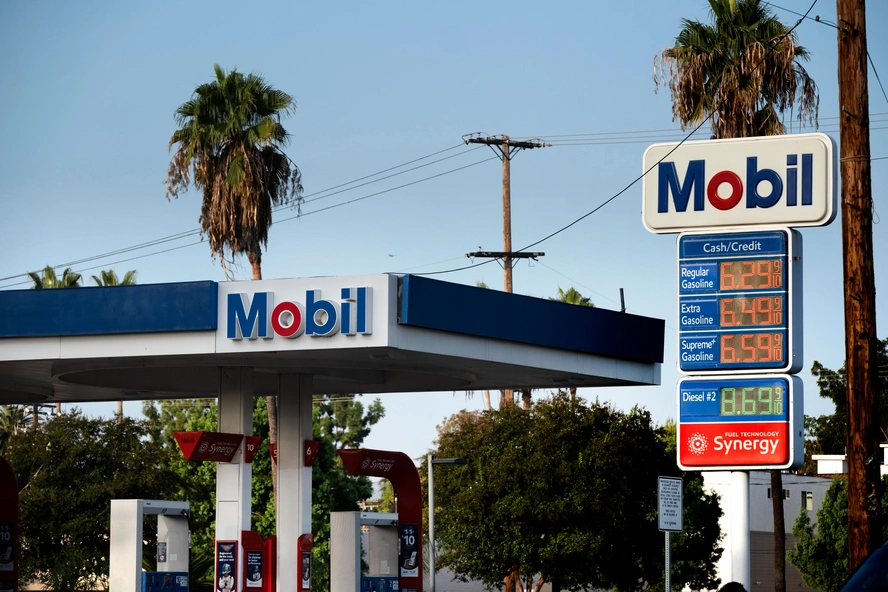
Five weeks before the 2026 midterms, two numbers are moving in the same direction at the same time: the price at the gas pump, and Democrats’ odds of controlling Congress. Whether the two are as tightly linked as Democratic strategists claim is a matter of genuine debate — but the timing, at minimum, has been hard for Republican campaigns to ignore.
Gas Prices Are Still Climbing as the Iran War Drags On
The national average price of gasoline sat at roughly $4.47 to $4.48 per gallon as of late September, according to AAA data cited by the Deseret News — an increase of more than 40% since the U.S. and Israel launched joint strikes against Iran in late February. Diesel prices have climbed even further, with some reporting increases above 70% since the war began. In six states — Alaska, California, Hawaii, Oregon, Nevada and Washington — average prices have topped $5 per gallon, and a Brown University analysis cited by NBC News estimates the price surge has cost American consumers more than $60 billion collectively.
The mechanism is straightforward: the conflict has constricted oil flow through the Strait of Hormuz, a critical global shipping chokepoint, tightening supply and pushing crude prices higher worldwide. That dynamic has shown up directly in broader inflation data — a point our recent Fed rate-hike coverage touched on, since energy costs remain one of the stickier components keeping core inflation above the Fed’s 2% target and complicating the central bank’s rate-path decisions heading into its October meeting.
What the Polls Actually Say About Trump’s Iran Strikes
President Trump has repeatedly dismissed polling that shows broad public opposition to the war, arguing there is a “silent majority” that supports his approach even if it doesn’t show up in traditional surveys. In an interview with the New York Post, Trump said: “I think people are very impressed with what is happening, actually. I think it’s a silent — if you did a real poll, the silent poll — and it’s like a silent majority.”
The available public polling, however, has consistently told a different story. Nate Silver’s polling average, updated September 24, put support for the war at roughly 33% versus 59% opposed. A Reuters/Ipsos poll that closed in late September found only 27% of Americans approved of the strikes, with 43% disapproving and the remainder unsure — and that same poll found Trump’s overall approval rating at a career-low 32%. A separate NBC News Decision Desk poll conducted in late August and early September found 31% approval versus 69% disapproval specifically on Trump’s handling of the Iran conflict, essentially unchanged from spring polling.
There is a consistent partisan divide underneath those topline numbers: most polls show a strong majority of Republicans approving of the strikes (commonly in the 55-77% range depending on the survey), while large majorities of Democrats disapprove, and independents lean toward opposition. Some individual polls — including one cited by Newsweek from Politico/Public Me — have shown a narrower gap or even net approval, so the polling picture, while lopsided on balance, is not unanimous. What most surveys agree on is that support for the war has softened rather than strengthened as it has continued, and that concerns about gas prices and cost of living are a significant part of why.
How That’s Showing Up in the Generic Ballot
Separate from views on Iran specifically, polling on the 2026 congressional midterms has moved steadily toward Democrats over the course of the year. A recent New York Times/Siena poll found likely voters trusting Democrats over Republicans on the economy by 7 points, on cost of living by 8 points, and on the deficit by 10 points, while giving Democrats a nearly 9-point edge on the generic congressional ballot. Cook Political Report’s own Battleground District Project poll, conducted across 37 competitive House districts, found Democrats ahead 49% to 47% among likely voters — a much tighter margin than the national generic ballot, reflecting how concentrated the actual battle for control will be in a relatively small number of districts.
Election forecasters have adjusted their ratings accordingly. Cook Political Report founder Charlie Cook said in a recent interview that Democrats retaking the House has been a “done deal for a good while,” while calling a Senate flip “very realistic” — a notable shift, since Republicans currently hold a Senate advantage built on a favorable 2026 map. Cook’s team projects Democrats could gain between five and 15 House seats and four to five Senate seats. Decision Desk HQ’s model, as of September 29, put Democrats’ probability of winning the House at 76% and the Senate at 55%, with a 53% probability assigned specifically to Democrats winning both chambers outright. Prediction-market trading on Polymarket showed a similar lean, with a “Democratic sweep” of both chambers as the leading outcome at roughly 62% as of the same date.
.
Not every read on the data is identical. Republican pollster Whit Ayres has argued Senate control remains genuinely up in the air, with as many as 12 seats in play, and Cook’s own state-by-state Senate ratings still list several competitive races — Iowa, Maine, Ohio and Texas — as toss-ups rather than clear Democratic leans. The House math is generally seen as more favorable to Democrats than the Senate math, given the smaller net-seat gain required (three seats) and a larger number of Republican-held toss-up districts.
The Political Fight Over Who’s to Blame
Democrats have made affordability, and gas prices specifically, a centerpiece of their midterm messaging. House Democrats’ campaign committee chair Suzan DelBene told Fox News Digital that rising gas prices amount to “another broken promise” from a president who campaigned on lowering costs, and Democratic messaging has repeatedly tied the price increases directly to the decision to strike Iran. The Congressional Budget Office has reportedly found that the war has contributed to higher domestic energy prices, giving that argument some independent analytical backing.
Republicans have offered a different framing. Some GOP officials have argued the price increases are temporary and tied specifically to disruptions in the Strait of Hormuz, suggesting — as one official put it — that prices “will immediately come down again” once that situation is resolved, with the administration reportedly forecasting a resolution around the time of the election. Other Republicans defend the strikes on national-security grounds regardless of the economic side effects, arguing that preventing Iran from developing nuclear weapons justified the action even if it proved costly and unpopular in the short term. A number of Republican strategists and even some elected officials have nonetheless grown visibly uneasy, with reporting from Time and others describing a growing number of Republicans breaking with Trump on Iran specifically because of the political exposure created by rising prices.
What This Means Heading Into November
The empirical picture, as of late September, shows three things happening at once: gas and diesel prices are up sharply since the war began; public approval of both the war and Trump’s overall job performance sits at or near record lows in most major polls, notwithstanding the president’s own characterization of a hidden “silent majority”; and most nonpartisan election forecasters now favor Democrats to retake the House, with a competitive but genuinely uncertain fight for the Senate. Whether those trends hold, reverse, or intensify over the final five weeks will likely depend heavily on whether the Iran conflict shows signs of resolution — and whether that translates into any relief at the pump before voters go to the polls on November 3.
Follow TNN for daily stock market news and financial news today.
Disclaimer: This publication is entirely for informational and journalistic purposes and does not constitute formal financial, investment, political, or legal advice. Polling figures, approval ratings, and election forecasts cited reflect data available at the time of publication from the sources linked above and are subject to change as new surveys and race ratings are released. TruthsAndNews.com does not endorse any political party or candidate.
About The Author
