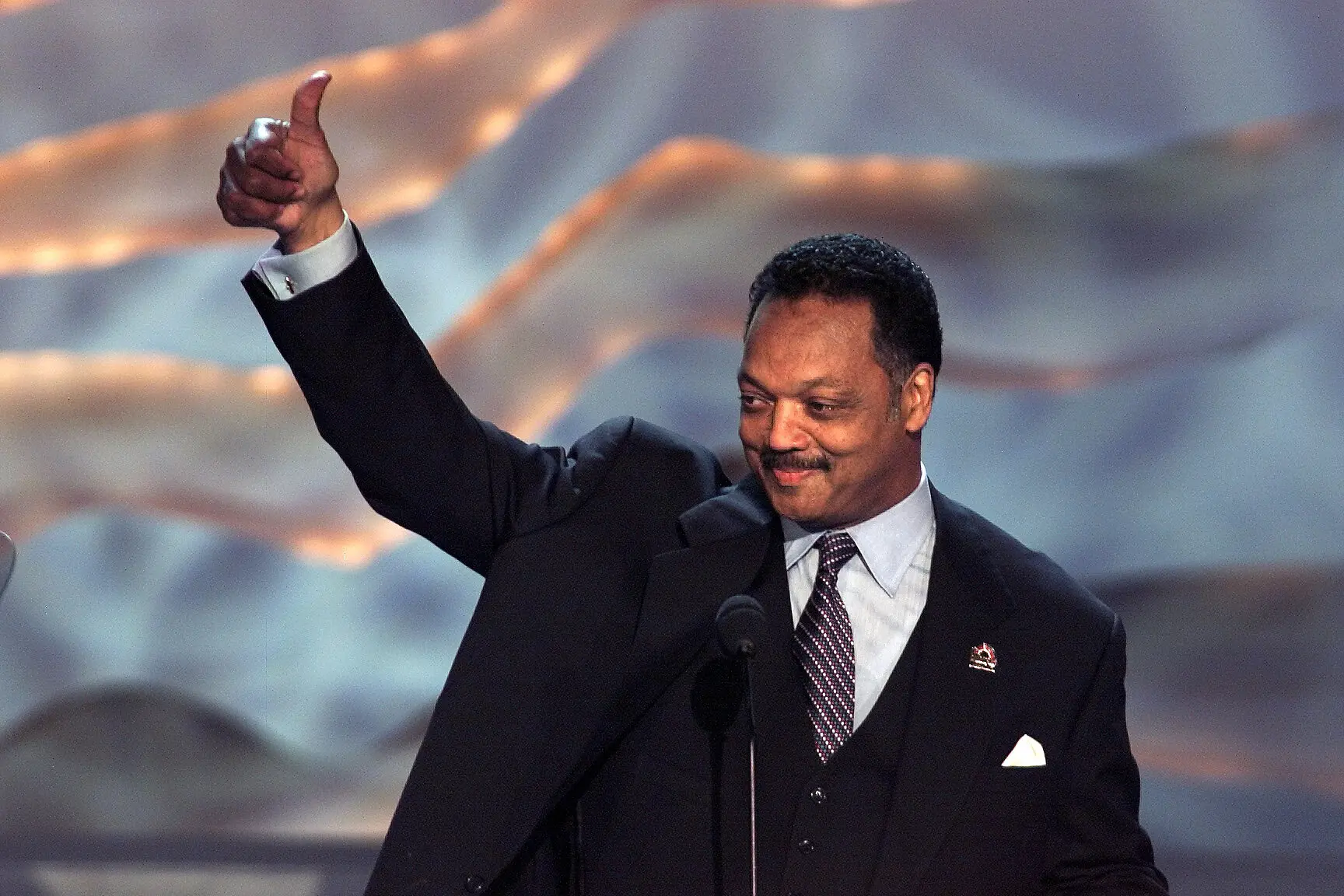
Jesse Jackson: A towering figure in American politics
The Rev. Jesse Jackson, the two-time presidential candidate and activist who dominated Black politics from the assassination of Martin Luther King Jr. in 1968 until the emergence of Barack Obama, died on Tuesday. He was 84.
Perhaps the greatest political orator of his generation, Jackson’s words enraptured crowds at rallies and national conventions, especially during his 1980s peak. His 1972 recitation of the affirming “I Am — Somebody” poem on Sesame Street went viral in the hours after his death, a reminder of how his message reached many audiences.
Tributes from across the political spectrum
News of his passing drew statement after statement. “Michelle and I were deeply saddened to hear about the passing of a true giant,” Barack Obama said, praising Jackson for helping to “lead some of the most significant movements for change in human history.” Former Presidents Joe Biden and Bill Clinton also paid tribute. Even Donald Trump offered praise, calling Jackson “a good man with lots of personality, grit and ‘street smarts’” and posting old photos of them together.
Jackson had been ill for some time, and his passing has prompted a national reckoning with his complex legacy. In earlier decades critics called him a self-promoter and pointed out he never held high elective office — a point former Marion Barry once mocked. Over time, however, a broader acceptance of his historical significance has grown, centered on his ability to bring marginalized groups into the political process.
Coalition politics and reaching the overlooked
“Jesse Jackson really understood and executed coalition politics,” said Abby Phillip, noting how he reached Arab Americans, farmers, Asian Americans and Native Americans—places and people other candidates ignored. Jerry Austin, who managed Jackson’s 1988 presidential run, said simply, “There’s never going to be anybody else like him.” Austin remembered how Jackson would travel to small, overlooked communities—arriving late at night in Meridian, Mississippi — and connect with people who felt unseen.
Jackson’s famous 1988 Democratic National Convention address captured that message: “Every one of these funny labels they put on you… I understand… When you see Jesse Jackson, when my name goes in nomination, your name goes in nomination.” That line is still recalled as one of the most moving appeals to Americans left outside the political center.
Controversy, influence and the arc of history
Jackson’s career was not without controversy. His use of the derogatory term “Hymietown” in 1984 damaged relations with Jewish Americans and dogged him for years. After his campaigns, the Democratic Party moved toward a more centrist direction for decades. Still, Jackson recognized the difficulty of structural change even after the optimism of later milestones: his tears at Chicago on the night of Barack Obama’s victory symbolized both triumph and the unfinished work he cared about. He asked then whether the nation was truly ready to invest in “evening the playing field” on health care and education.
In recent years Jackson’s brand of left-leaning populism found echoes in the campaigns of Bernie Sanders and in city-level victories like Zohran Mamdani’s win. As Mamdani wrote on social media, “He marched, he ran, he organized and he preached justice without apology. May we honor him not just in words but in struggle.”
The meaning of his work for Black America
Jackson’s resonance in the Black community was profound. “He gave an entire generation of Black Americans a new, fresh sense of hope,” said Basil Smikle. For many, his candidacies lifted what he called the ceiling on Black possibility — inviting people who felt marginalized to imagine themselves in positions of power. He may not have won the presidency, but he did alter the political conversation and helped pave pathways for others.
A life rooted in struggle and oratory
Born the child of an unmarried mother in South Carolina, Jackson saw violence and loss up close. Including the assassination of Martin Luther King Jr.. He spent decades knitting together the diverse “quilt” of the American experience through speeches, organizing and campaigns. His oratory — at rallies, conventions and even on children’s television — made complex political demands feel immediate and moral.
What remains
Jackson’s death has prompted reflection on his many contradictions. The charisma and controversy, the organizer and the candidate, the preacher and the politician. Yet nearly every commentator and ally agrees on one point. His unique ability to bring attention to people and places that politics often ignored. As the nation digests his passing, many ask how his model of coalition-building and moral urgency can be revived for today’s struggles.
Follow TNN for more on jesse jackson, notable quotes and reflections on his life. Get ongoing US news today and Canada news today.
About The Author
