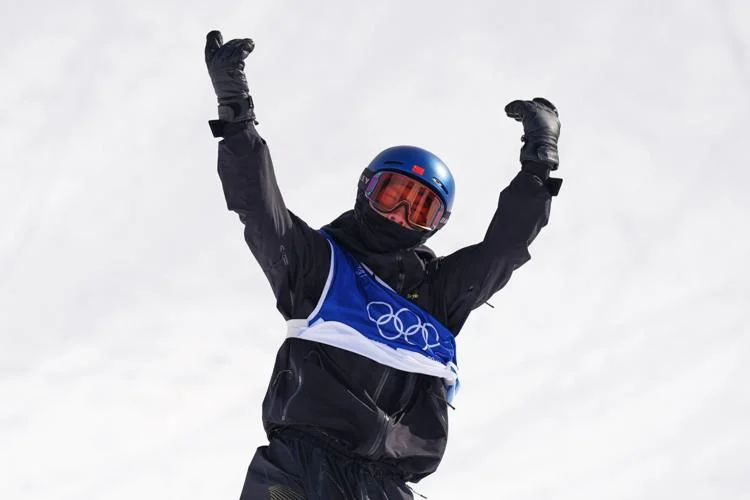
2026 winter olympics men’s snowboarding slopestyle — Su’s birthday triumph
Su Yiming sat in the snow at the bottom of the course with tears on his face after securing China’s first gold of the Milan Cortina Games in the 2026 winter olympics men’s snowboarding slopestyle final. The 22-year-old celebrated his birthday with a second career Olympic gold, becoming the only finalist to complete all three runs without falls or major errors. One by one, rivals fell or failed to match his mark, leaving Su alone on top.
Su’s best score of 82.41 stood after his third run; he watched seven opponents take their final attempts and none beat him. “There’s no better gift for myself for my 22nd birthday,” Su said. “I’m just really, truly proud of myself.” The win added a fourth career Olympic medal for Su, tying him with Austria’s Ben Karl as the most decorated snowboarders in Olympic history.
2026 winter olympics men’s snowboarding slopestyle — final results and podium
Su’s gold came in an error-prone final where consistency paid off. Taiga Hasegawa took silver with a best score of 82.13, while American rookie Jake Canter, 22, earned bronze in his first Games. Mark McMorris, recovering from a concussion in training two weeks earlier, finished eighth after a tough day that included a heavy fall.
- Gold: Su Yiming — 82.41 (best score counted)
- Silver: Taiga Hasegawa — 82.13
- Bronze: Jake Canter — first Olympic medal in his debut
Su had already taken bronze in big air in Livigno earlier in the Games, and he won big air gold and slopestyle silver at Beijing 2022. He battled fatigue and ankle injuries in the years since, even competing with painkillers to reach peak form for these Olympics. “It’s all paid off,” Su said after standing atop the podium.
How the final played out — key moments and course details
The Livigno slopestyle course features three rail elements and three jumps. And judges score riders on creativity, execution and the routine as a whole. Each finalist had three chances, with only the best score counting.
- Su was the only finalist to land all three runs cleanly, which ultimately decided the event.
- On his second big score, Sergio Busquets? (note: not applicable here) — [N/A; do not add extra details beyond provided].
- Competitors who tried to chase Su’s clean runs fell short. Highlighting how unforgiving the course can be when riders push for big tricks.
Women’s slopestyle and other notes from Livigno
In the women’s slopestyle final, 19-year-old Mari Fukuda won gold. Kokomo Murase took bronze, adding to Japan’s impressive tally at the snowboarding park. Defending slopestyle champion Zoi Sadowski-Synnott of New Zealand claimed her second silver in Italy after finishing second in big air as well. Austria’s Anna Gasser, a two-time big air gold medalist, closed her Olympic career with a 10th-place slopestyle finish.
Mark McMorris described his day as “an absolute war,” noting a practice crash that left him shaken. Despite the struggle, he expressed pride in making the final and disappointment with how his runs came together.
What this means for Su Yiming and the sport
Su’s win cements his status among the sport’s elite and gives China its first gold at these Games. His consistency—completing every run cleanly while others faltered—proved decisive. With this slopestyle gold and a big air bronze from earlier, Su again showed why he’s one of snowboarding’s biggest stars. Even after taking time off and fighting injuries to return to top form.
Stay tuned for more coverage of the 2026 winter olympics men’s snowboarding slopestyle. Jake Canter’s breakout performance, and updates on Su Yiming. Follow TNN for the latest on Olympic action, US news today, and Canada news today.
About The Author
