Grayson receives maximum sentence in Sonya Massey case
A former Illinois sheriff’s deputy was sentenced Thursday to 20 years in prison for fatally shooting Sonya Massey, a Black woman who had dialed 911 to report a possible prowler outside her Springfield home. Sean Grayson, 31, was convicted in October of second-degree murder in a police brutality case that sparked protests and led to a U.S. Department of Justice inquiry.
Grayson, who has been jailed since his arrest, testified at trial that he feared Massey was about to scald him with a pot of steaming water she had removed from the stove. He apologized in court and said he wished he could bring Massey back and spare her family the pain he caused. His attorney had sought a six-year term, noting Grayson has late-stage colon cancer that has spread to his liver and lungs.
Family reaction and courtroom moments
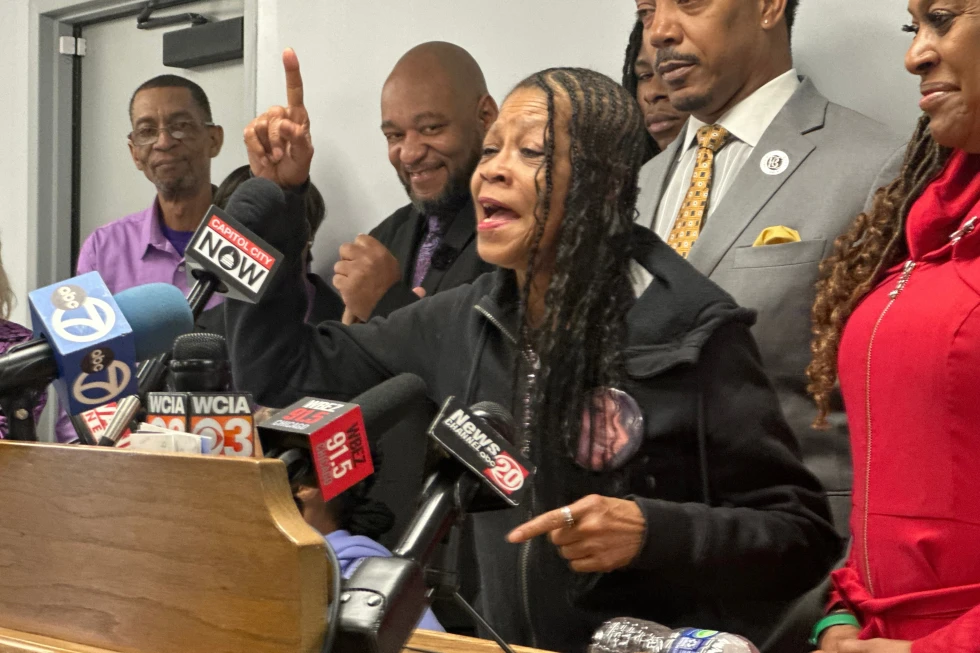
Massey’s parents and two teenage children pushed for the maximum sentence. They described how their lives changed after her death. Her children said they had to grow up without a mother, and Massey’s mother said she now lives in fear. “I cry every day,” Donna Massey told the court. “I’m afraid to call the police in fear that I might end up like Sonya.”
State’s Attorney John Milhiser argued Massey would still be alive if another sheriff’s deputy had responded to her 911 call. “Sonya Massey’s death rocked her family. But it rocked the community, it rocked the country,” Milhiser said. The family cheered when Judge Ryan Cadagin read the sentence, though the judge admonished them for the outburst. Massey’s 16-year-old daughter Summer said afterward, “Twenty years is not enough. But they did what they could do.”
With credit for nearly 19 months already spent behind bars and a day shaved off for each day of good behavior, Grayson could be released in just under eight and a half years.
What happened the night of the shooting
In the early morning hours of July 6, 2024, 36-year-old Massey, a single mother who struggled with mental health issues, called 911. Because she feared a prowler outside her Springfield home. Body camera footage shows Grayson and Deputy Dawson Farley, who was not charged, searching outside before meeting Massey at her door. Massey appeared confused and repeatedly said, “Please, God.”
The deputies entered her house. Grayson noticed a pot on the stove and ordered Farley to move it. Massey retrieved the pot and teased Grayson for moving away from “the hot, steaming water.” The exchange escalated. Massey said, “I rebuke you in the name of Jesus.” Grayson drew his sidearm, yelled for her to drop the pan. And after she set it down and ducked behind a counter. Then seemingly picked it up again — Grayson opened fire, shooting Massey in the face.
Conviction, controversy and calls for change
Grayson was originally charged with three counts of first-degree murder. Which could have meant a life sentence. A jury convicted him of the lesser second-degree murder charge, which Illinois allows if a defendant honestly believed they were in danger, even if that fear was unreasonable. Massey’s family was outraged by the downgraded verdict at trial. Though some family members later expressed cautious gratitude at Thursday’s sentencing.
Her cousin Sontae Massey said the justice system “did exactly what it’s designed to do” after the verdict. But on Thursday said he was “thankful” for the sentence. He also urged reform of outdated laws and noted there is “a long way to go” to fix the environment that created the tragedy.
Aftermath: settlement, DOJ review and reforms
Massey’s killing renewed scrutiny of law enforcement shootings of Black people at home. Civil rights attorney Ben Crump negotiated a $10 million settlement with Sangamon County for Massey’s relatives. The case prompted a U.S. Justice Department inquiry that settled when the county agreed to implement more de-escalation training and to collect more use-of-force data. The sheriff who hired Grayson was forced to retire. And the case led to a change in Illinois law requiring fuller transparency on the backgrounds of law enforcement job candidates. Family members’ urge that such they implement such reforms at the federal level.
Grayson told the court he understood the family’s anger and begged for forgiveness. While acknowledging that it would not come “any time soon.” James Wilburn, ending his victim impact statement by quoting his daughter — “Sean Grayson, I rebuke you in the name of Jesus.”
said he could not reconcile Grayson’s apology with the claim at trial that Massey was the aggressor.
For more on sonya massey, sean grayson and ongoing coverage of the case, follow TNN. Get the latest US news today and Canada news today.
About The Author
