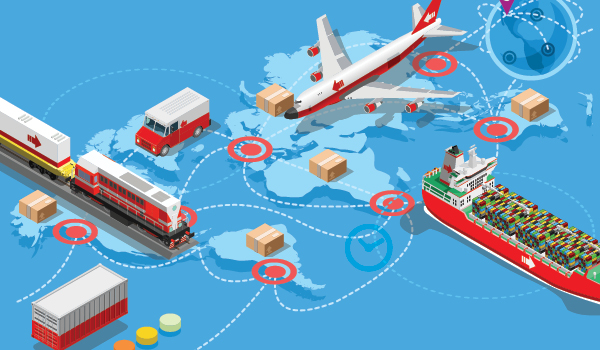
If you’ve searched how global trade works, this guide explains the essentials in plain language. Global trade is the exchange of goods and services across national borders. It’s guided by economic principles (like comparative advantage), coordinated through policies and institutions (tariffs, trade agreements, the WTO), and tracked by international organizations. Below you’ll learn why countries trade, the main tools and rules that shape trade, how trade balances are measured, and the recent trends changing the system today.
Why countries trade — the idea of comparative advantage
A core reason to understand how global trade works is comparative advantage. Countries specialize in producing goods they can make relatively more efficiently and trade for what others make more cheaply. Specialization raises total world output and lets consumers access a wider variety of goods at lower prices. That principle first formalized by economists centuries ago, explains why even countries that are efficient in many areas still benefit from trading with one another. (Investopedia)
How goods and services move across borders
Global trade happens in markets where exporters sell to foreign buyers and imports arrive via shipping, air freight, or digital delivery (for many services). Firms rely on logistics networks, customs procedures, and trade finance (letters of credit, export credit) to convert production into cross-border sales. Modern trade also depends on global supply chains: components cross multiple borders before a final product ships to consumers.
Trade policy tools: tariffs, quotas, and non-tariff measures
Governments influence trade flows using policy instruments. The most familiar are:
- Tariffs (import duties): taxes applied to imported goods that raise their final price and can protect domestic producers or raise revenue. (Investopedia)
- Quotas: limits on the quantity of a product that can be imported.
- Non-tariff measures: standards, licensing rules, and technical regulations that affect market access.
While tariffs make imports more expensive, they can also raise costs for consumers and firms that rely on imported inputs. Recent increases in some countries’ tariff use have drawn concern from global trade bodies because they reduce predictability in the trading system. (Reuters)
Trade rules, agreements, and the role of the WTO
Understanding how global trade works requires knowing about the rules-based system centered on the World Trade Organization (WTO). The WTO provides the legal and institutional framework for international trade. It hosts trade negotiations, administers agreements (like the General Agreement on Tariffs and Trade). And operates a dispute-settlement mechanism to resolve member conflicts. Regional and bilateral trade agreements (free trade agreements, customs unions) layer on top of multilateral rules and can offer deeper market access between signatory countries. (World Trade Organization)
Measuring trade: exports, imports, and trade balances
Trade statistics are usually reported as exports (what a country sells abroad) and imports (what it buys). The difference, exports minus importS, is the trade balance. A trade deficit means imports exceed exports; a trade surplus means exports exceed imports. Economists and policymakers watch trade balances as part of the current account and broader external-position analysis, but deficits or surpluses are not inherently “good” or “bad” — their implications depend on why they occur (investment vs. consumption, capital flows financing deficits, etc.). (IMF)
Who gains and who loses — benefits and distributional effects
Global trade generally raises aggregate economic welfare: consumers gain from lower prices and firms can scale to sell to larger markets. The World Bank and other institutions highlight trade’s role in growth and poverty reduction when paired with good domestic policies and infrastructure. However, trade also creates adjustment costs: some industries shrink, and workers in affected sectors can lose jobs. Which is why many countries combine trade openness with policies for retraining, safety nets, and investment in competitiveness. (World Bank)
Modern dynamics: supply chains, technology, and policy risks
Two big forces shape how global trade works today:
- Global supply chains and just-in-time production mean disturbances (pandemics, shipping bottlenecks, or natural disasters) can quickly ripple across countries.
- Technology and AI are changing trade patterns (demand for data services and AI-related goods is rising), and institutions like the WTO warn that rapid change may widen gaps if lower-income countries lack digital capacity. Recent WTO commentary highlights both the boost from tech-related trade and the risks from rising tariffs and policy fragmentation. (Financial Times)
Practical steps for businesses and policymakers
For exporters and importers learning how global trade works, practical actions include:
- Understand tariff classifications and rules of origin — small changes can affect duty bills.
- Use trade agreements to lower costs where applicable and secure supply-chain diversification to reduce single-source risk.
- Monitor trade finance options and customs compliance to avoid delays.
Policymakers balancing openness and domestic adjustment need targeted support programs for displaced workers, investments in skills, and infrastructure to maximize trade’s gains.
Where to learn more and follow the latest trends
Authoritative sources for ongoing trade information include the WTO (for rules and disputes), the World Bank (on trade and development), the IMF (on balance-of-payments and macro risks), and major news outlets for policy developments. These organizations publish accessible explainers, data portals, and forecasts that help firms, students, and citizens follow how global trade works in practice. (World Trade Organization)
Bottom line: How global trade works combines economic logic (comparative advantage), public policy (tariffs, agreements), institutions (WTO and regional pacts), and logistics (supply chains and finance). Trade brings broad benefits but also distributional challenges. And recent developments — from tariffs to AI-driven demand — are reshaping the terrain. Understanding these pieces helps businesses, students, and citizens make better decisions in an interconnected world.
Follow TNN for more world news!
About The Author
