How Global Health Emergencies Work
When you ask how global health emergencies work, you’re asking how countries, international agencies, NGOs and labs detect threats, decide when a crisis is international, and organize a coordinated response. This article explains the legal framework (the International Health Regulations), who leads coordination (WHO and partner networks), operational mechanisms (GOARN, Health Cluster/UN coordination, national focal points), how information and assets move, and what citizens can reasonably expect during a global health emergency.
The legal backbone: International Health Regulations and the PHEIC
The central rulebook for answering how global health emergencies work is the International Health Regulations (IHR, 2005). The IHR require countries to notify WHO about events that may constitute a Public Health Emergency of International Concern (PHEIC) and set common expectations for surveillance, reporting, and public-health capacities. When an event meets IHR criteria, WHO may convene an Emergency Committee and the Director-General can declare a PHEIC to catalyze global action and guidance. (World Health Organization)
Who coordinates the international response — WHO and partner networks
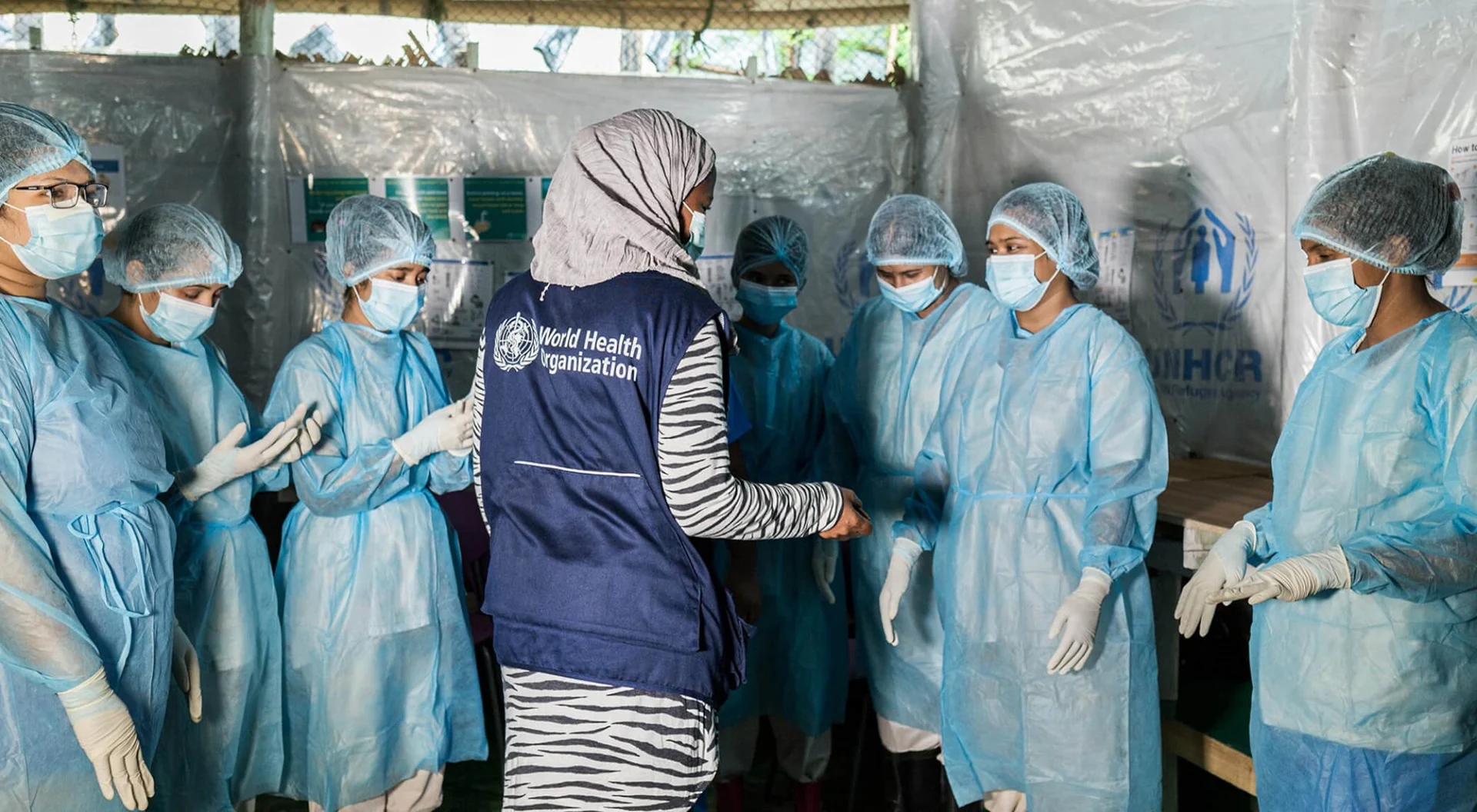
In practice, the World Health Organization (WHO) is the lead global coordinator for health emergencies: it maintains global early-warning functions, issues technical guidance, supports countries with expertise and supplies, and convenes partners to mount a joint response. WHO’s emergency operations teams implement incident management systems to organize technical pillars (surveillance, case management, logistics, risk communication) during acute events. (World Health Organization)
To extend capacity beyond WHO’s own staff, WHO works through large partnerships — most notably the Global Outbreak Alert and Response Network (GOARN) — a network of hundreds of institutions (labs, public-health agencies, academic groups, NGOs) that can rapidly deploy technical experts, lab support, and operational teams to outbreak hotspots. GOARN and related networks are a practical mechanism for pooling specialized skills quickly when a country needs surge capacity. (World Health Organization)
How detection and early warning work
Detection starts in national systems. Under the IHR, countries maintain surveillance systems and national IHR focal points to report unusual clusters or threats to WHO. WHO then conducts risk assessment and may trigger international alerts or request further information. Global surveillance is fed by routine reporting, event-based signals (media, sentinel sites), laboratory confirmations shared through networks, and formal notifications from affected governments. Rapid, accurate detection and transparent reporting are the first, most important steps in explaining how global health emergencies work. (World Health Organization)
Operational coordination on the ground — Health Cluster and UN system
When a health emergency overlaps with a humanitarian crisis (conflict, mass displacement, natural disaster) the Health Cluster—part of the UN-led cluster approach—helps coordinate the multiple health actors operating in country (ministries of health, WHO, NGOs, Red Cross/Red Crescent partners) to avoid duplication and fill gaps (surge staffing, essential medicines, vaccination campaigns). The cluster system brings predictable leadership and pooled planning in complex emergencies and connects health action to other sectors (water/sanitation, logistics, protection). (Health Cluster)
How decisions are made and who funds the response
Decisions about technical strategy (treatment protocols, vaccine allocation, travel advice) are made by WHO with input from expert committees and partners; political and border measures remain the prerogative of sovereign states, though WHO guidance seeks to minimize unnecessary travel/trade restrictions. Funding and logistics come from a mix of sources: national budgets, multilateral agencies, donor contributions, rapid-response funds, and implementing partners. (WHO keeps contingency funds and partner mechanisms to move money and supplies quickly; partner humanitarian funds and donor pledges scale up for large responses.) This public–private mix is why coordination platforms—WHO, GOARN, UN country teams and clusters—exist: to match technical need with money and operational capacity. (World Health Organization)
Common operational pillars in a coordinated response
A typical coordinated emergency response organizes work into standard pillars. These commonly include:
- Surveillance & laboratory confirmation — case finding, testing, genomic sequencing.
- Case management & infection prevention — clinical protocols, protective equipment, training.
- Vaccination & therapeutics — where available, prioritized under ethical allocation frameworks.
- Risk communication & community engagement — clear messages to build trust and counter misinformation.
- Logistics & supply chains — moving PPE, diagnostics, oxygen and cold-chain items to points of care.
- Coordination & planning — joint incident management, situation reports, and operational dashboards.
These pillars are staffed by national health teams supported by WHO, GOARN deployments, NGOs and sometimes military logistics assets when civilian capacity is overwhelmed. (World Health Organization)
Limits, challenges, and lessons learned
Understanding how global health emergencies work means recognizing persistent challenges:
- Uneven national capacity: Some countries lack laboratory, surveillance, or clinical capacity to detect and manage outbreaks, which delays global response. (PubMed Central)
- Data sharing and timeliness: Political sensitivities and reporting delays can slow global situational awareness and degrade early response. (World Health Organization)
- Coordination complexity: Multiple actors with overlapping mandates create friction unless roles are clearly led and agreed; the cluster system and GOARN attempt to reduce fragmentation. (Health Cluster)
- Sustained financing: Rapid funds are available for immediate needs, but long-term recovery and capacity-building require predictable financing. (World Health Organization)
Past emergencies (SARS, Ebola, COVID-19) show that rapid transparent reporting, early coordination, and investments in national health systems are the best insurance against large, protracted international outbreaks. (TIME)
What this means for the public — practical expectations
If a global or regional health emergency occurs, expect the following:
- WHO will issue technical guidance and may declare a PHEIC if criteria are met. That declaration steers international attention and resource mobilization. (World Health Organization)
- National health agencies will lead local response and may impose public-health measures (testing, isolation, movement restrictions). While coordinating with WHO and partners. (World Health Organization)
- International partners (GOARN, NGOs, UN clusters) will deploy specialists, supplies, and logistic support where requested by the affected country. (World Health Organization)
Citizens can help by following official guidance, seeking information from national public health agencies and WHO, and avoiding sharing unverified rumors that complicate response efforts.
Final takeaway
The short answer to how global health emergencies work is this: the IHR set expectations and the PHEIC mechanism provides a trigger. WHO coordinates technical leadership; GOARN and the Health Cluster marshal expert teams and humanitarian partners; and national governments remain the primary implementers on the ground. Effective responses depend on early detection, transparent reporting, rapid partner coordination, and predictable funding. Lessons reinforced by SARS, Ebola and COVID-19. If you want, I can convert this guide into a two-page explainer for your editors or draft a template checklist journalists can use when covering future health emergencies.
Follow TNN for more world news, US news, canada news today!
About The Author
