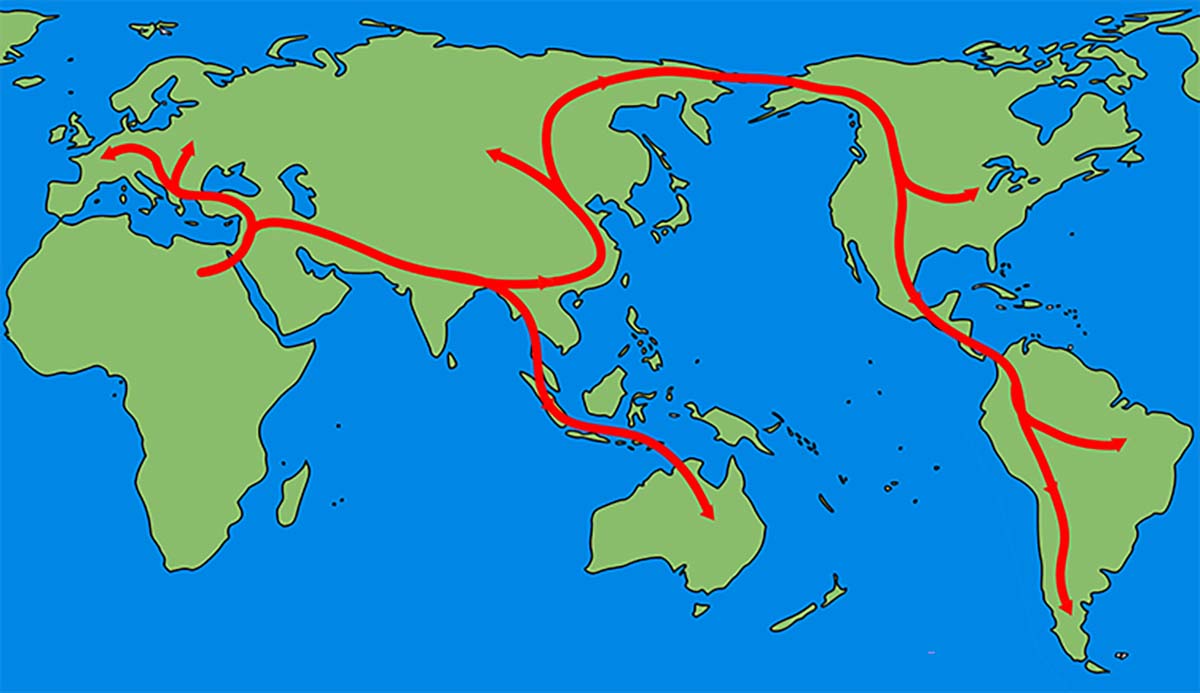
How Migration Patterns Work
If you’re researching how migration patterns work, this article explains the key drivers, the scale and direction of flows, and the concrete ways migration reshapes origin and destination regions — from labor markets and demographics to remittances, urbanization, and politics. Below you’ll find evidence-based facts about recent global migration trends, a framework for thinking about push-and-pull forces, the economic and social impacts on regions, plus policy options governments use to manage mobility.
The current scale and basic facts
International migration is large and growing. Recent estimates put the global number of international migrants at roughly 300 million people (about 3–4% of the world’s population), with stock and flow figures rising since 1990. Remittances — money migrants send home — are a major financial channel: recent reports estimate global remittances to developing countries in the hundreds of billions of dollars annually, a level that in some regions now exceeds foreign direct investment. These headline figures matter because they show how migration patterns work not only as human movement but as an economic force. (Migration Data Portal)
How migration patterns work: the drivers (push and pull)
Migration patterns result from interacting push and pull factors:
- Economic opportunity and wage gaps. Large income differences between origin and destination countries remain the most powerful long-run driver: workers move to capture higher wages and better job prospects. The World Bank and OECD document persistent cross-country income gaps that sustain labor migration. (World Bank)
- Conflict, persecution and disasters. Wars, state collapse, and environmental shocks force people to move for safety and survival. Refugee flows and forced displacement create sudden, high-volume movements that reshape regional patterns. (IOM Publications)
- Demographics and aging. Aging populations in many high-income countries create demand for workers in health care, construction, agriculture, and services — a pull factor for younger migrants from lower-income regions.
- Social networks and migration systems. Established diasporas reduce migration costs and risks by providing information, jobs, and housing, reinforcing routes and concentrations in particular cities or regions.
These drivers interact with policy (visa rules, border enforcement) and shocks (pandemics, commodity price swings) to produce the observed flows. Understanding how migration patterns work means reading these factors together, not in isolation.
Regional patterns: who goes where — and why it matters
Migration flows are geographically patterned:
- South→North flows: Large volumes of migrants move from low- and middle-income countries to high-income economies in North America and Western Europe, drawn by jobs, education, and family ties.
- Intra-regional flows: Significant movement occurs within regions (for example, within Africa, Southeast Asia, and Latin America), often driven by work in nearby cities or cross-border labor markets.
- Labor corridors: Certain bilateral corridors (e.g., Philippines→Gulf, Mexico→United States) concentrate flows because of historic recruitment practices, language ties, or economic complementarities.
These spatial patterns matter because they shape where remittances go, which local labor markets are affected, and how urban systems absorb new arrivals. (IOM Publications)
Economic impacts on origin regions
Migration changes origin regions in several measurable ways:
- Remittances and household welfare. Money sent home supports consumption, education, and health; globally remittances to developing countries amount to hundreds of billions annually, and in some countries are a major share of GDP. Those flows stabilize household income and can finance small businesses, but they can also create dependency or distort local labor markets. (World Migration Report)
- Labor and skills effects. Emigration can ease unemployment pressure but also create skill shortages (brain drain) in critical sectors. Some regions see “brain circulation” where skilled migrants return with savings and new skills, but others lose vital human capital. Emerging research shows these effects vary by skill level, sector, and institutions. (World Bank)
- Fiscal and demographic impacts. Emigration can change dependency ratios and alter local public-finance needs; when working-age people leave, aging and service provision challenges can intensify locally.
Impacts on destination regions
For destination regions, migration patterns influence labor markets, innovation and demographics:
- Filling labor gaps. Migrants often take jobs that local workforces cannot meet. From agriculture and construction to health and tech sectors — helping sustain services and growth in aging societies. (World Bank)
- Economic dynamism and entrepreneurship. Migrants contribute to entrepreneurship, trade links, and human-capital complementarities that can boost productivity in host regions when integrated effectively. (NBER)
- Integration costs and social dynamics. Short-term public costs for housing, schooling, and language services exist, and successful integration policies (education, recognition of credentials) determine long-run outcomes and social cohesion.
Risks, human costs and irregular migration
A sobering dimension of how migration patterns work is the human risk in irregular routes. Record numbers of migrant deaths in some years and regions show the lethal consequences of unsafe crossings; humanitarian agencies report thousands of fatalities at borders each year. Irregular migration also exposes people to exploitation, trafficking, and precarious work. Addressing these harms requires safer legal pathways, search-and-rescue capacity, and cooperation across transit countries. (AP News)
Policy responses: managing mobility at regional scale
Governments and regional bodies use several policy levers that shape migration patterns:
- Legal migration channels and labor mobility schemes to match workers with demand in destination markets.
- Regional agreements and free-movement zones (e.g., ECOWAS, some Gulf labor arrangements) that institutionalize cross-border work and rights. (OECD)
- Integration and credential-recognition policies that boost migrants’ economic contribution.
- Development cooperation and migration governance aimed at addressing root causes and improving migration management, backed by data tools like the IOM’s Migration Governance Indicators.
Final takeaway — how migration patterns work in practice
In short, how migration patterns work is a multi-dimensional story. Economic opportunities, conflict, demographics, and networks drive flows that repeatedly reorganize regional economies, urban systems, and social structures. The best policies balance safe, legal pathways and integration programs with investments in origin-country development and labour-market matching. For reliable, up-to-date data and policy guidance, consult the IOM World Migration Report, UN DESA population briefs, World Bank remittance analyses, and the OECD migration outlook. These sources give the empirical foundation needed to understand and shape migration patterns constructively. (International Organization for Migration)
Follow TNN for more world news. Get daily latest updates on US news and Canada News Today!
About The Author
