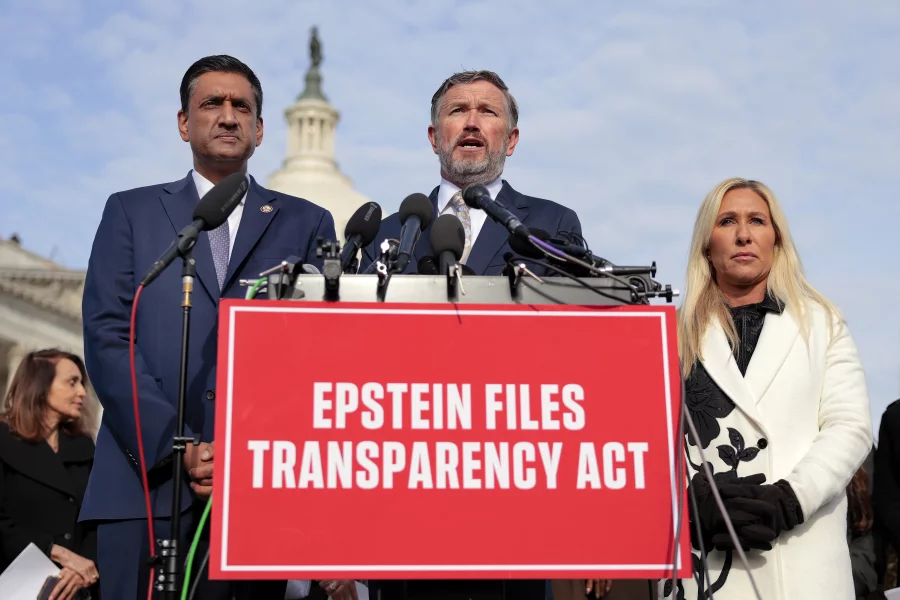
Epstein Files Transparency Act and Document Release
In late January 2026, the U.S. Department of Justice published over 3.5 million pages of material under the Epstein Files Transparency Act. Signed in November 2025, this law required all Epstein-related documents to be made public. DOJ officials said the release includes court records, emails, videos (2,000+), and images (180,000+) from investigations of Jeffrey Epstein and Ghislaine Maxwell.
The documents come from multiple sources – Florida and New York cases, FBI probes, and an Inspector General investigation – and were reviewed by hundreds of attorneys to remove sensitive content. DOJ Deputy Attorney General Todd Blanche emphasized that redactions focused on protecting victims’ identities. Notable public figures’ names were not withheld. However, some submitted materials turned out to be hoaxes (e.g. false claims against President Trump).

Saul Loeb/AFP via Getty Images
Scope of the Release
The January 30 press release stated that nearly 3.5 million pages had now been released. This followed an earlier partial release in December 2025. The backlog was due largely to the volume of records and the need to redact personal data. Blanche noted that the DOJ had missed the Dec.19 deadline but was working through the material, reviewing documents to ensure the protection of survivors’ privacy.
The released files include emails and schedules showing Epstein’s meetings with politicians, business leaders and celebrities. They also contain evidence of how his trafficking operation functioned, such as charts of his associates and victims. Summary compilations – like spreadsheets of tips to law enforcement – are also in the dump. Importantly, DOJ cautioned that “fake or sensationalist claims” might appear in the data, as they included everything submitted to the FBI.
What’s Next for the Files
DOJ officials have said more releases will continue until “substantially all” Epstein records are public. Victims’ advocates remain concerned about errors (see Victims and Privacy article). Meanwhile, journalists and Congress are combing through the files for leads on Epstein’s network. The transparency act marks a significant change from the years of secrecy around Epstein’s cases, offering unprecedented public access.
For continual updates on the Epstein documents and related developments, follow Truths and News (TNN).
About The Author
