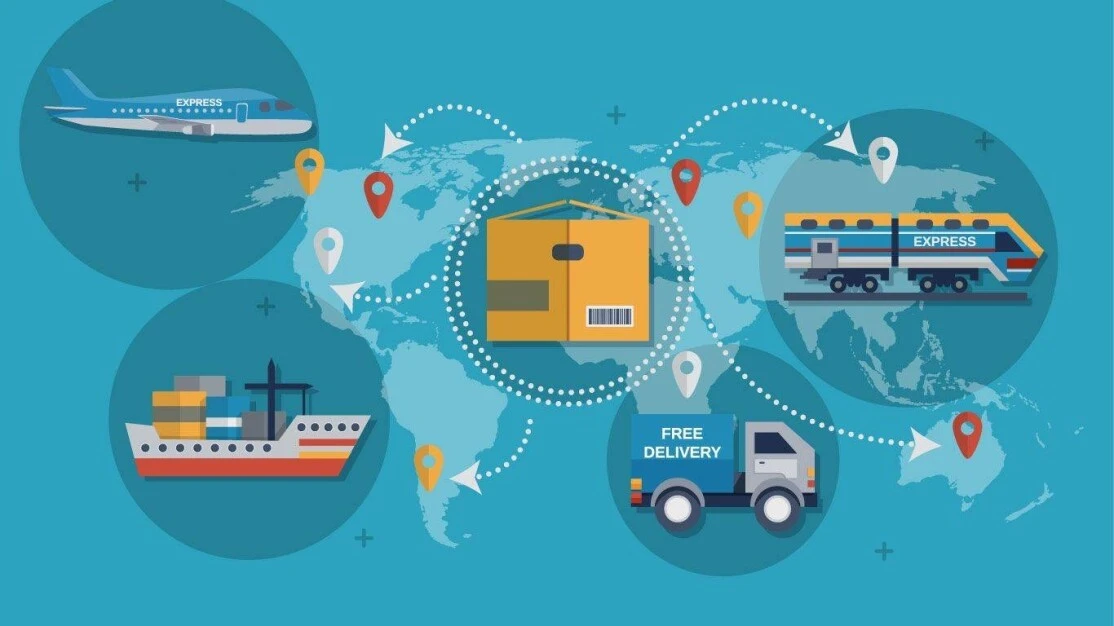
How Global Supply Chains Work
If you want to understand how global supply chains work, this article explains the process step-by-step, why modern economies depend on tightly integrated logistics, what went wrong during recent disruptions, and practical ways companies and governments build resilience. The piece covers the main stages of a supply chain, the role of inventory strategies like just-in-time, common risks (from pandemics to cyberattacks), and trade-offs—such as reshoring versus diversification—that shape policy and corporate choices.
What we mean by “how global supply chains work”
At its simplest, a supply chain is the network of organizations, people, activities, information and resources involved in moving a product or service from supplier to customer. Supply chain management (SCM) oversees the entire lifecycle: sourcing raw materials, manufacturing, transportation, warehousing, distribution, and final delivery — plus reverse logistics (returns and recycling). Logistics is the part of SCM that focuses on moving and storing goods efficiently. (ibm.com)
The basic stages — a practical flow of how global supply chains work
- Sourcing and procurement: Companies identify and contract with suppliers for raw materials and components. Supplier selection affects cost, quality, lead time, and risk exposure.
- Manufacturing and assembly: Components are transformed into finished goods. Global supply chains often separate stages across countries where labor, expertise, or inputs are cheapest or most available.
- Inbound and outbound logistics: Transportation (sea, air, rail, truck) moves goods between suppliers, factories, ports, and distribution centers. Freight operators, ports, and customs processes are critical nodes.
- Warehousing and inventory management: Warehouses hold stock to buffer demand variability. Inventory strategies—such as safety stock or just-in-time (JIT) ordering—determine how much stock is kept on hand. (ibm.com)
- Distribution and last-mile delivery: Finished goods are shipped to retailers or directly to consumers; the “last mile” often drives cost and customer satisfaction.
- Reverse logistics / returns: Repair, recycling, or disposal completes the product lifecycle and affects sustainability and regulatory compliance.
Understanding these stages clarifies how global supply chains work: each stage depends on the others, so a disruption in one place (a supplier, a port, or a truck fleet) can cascade across the whole system.
Why modern supply chains became so interconnected
Over the last decades firms optimized costs and speed through specialization, offshoring and lean production. Strategies like JIT reduced inventory costs by receiving materials “just in time” for production—minimizing warehousing costs and working capital—but this also reduced buffers against disruption. That optimization explains both the efficiency and fragility of many global chains. (Investopedia)
Recent shocks that demonstrate how global supply chains work — and break
From 2020 onward, global supply chains experienced multiple, overlapping shocks: COVID-19 factory shutdowns, a semiconductor shortage, major port congestion, the Suez Canal blockage, and geopolitical pressures (including impacts from the Russia-Ukraine war). These events show how health shocks, concentrated production of critical inputs, and chokepoints in shipping can generate large, persistent delays and higher costs worldwide. (Wikipedia)
Common vulnerabilities — physical and digital
Supply chains face several vulnerability types:
- Concentration risk: Heavy reliance on a single country or a small set of suppliers for a critical input (e.g., semiconductors) creates chokepoints.
- Logistics chokepoints: Key ports, canals, and rail hubs (Suez, Panama, major U.S. ports) can become bottlenecks if capacity is disrupted.
- Operational risk: Labor shortages, factory shutdowns, or transport delays directly reduce throughput.
- Cyber and software supply-chain attacks: Attacks on IT systems or third-party software can cripple planning, ordering, or operations—an increasingly important risk vector. (BlueVoyant)
Strategies for resilience — tradeoffs and real choices
When businesses and governments ask how to improve the way global supply chains work, common strategies include:
- Diversification of suppliers and geographies: Avoid single-source dependence by qualifying multiple suppliers across different regions. This reduces the chance that one localized shock stops production — but increases coordination complexity and cost.
- Strategic inventories and “just-in-case” buffers: Firms may keep higher safety stocks or secure strategic reserves of critical inputs; this increases carrying costs but reduces the risk of stockouts.
- Nearshoring / reshoring: Moving production closer to end markets shortens lead times and increases control—yet economists warn that aggressive reshoring can reduce global efficiency and lower GDP compared with diversification, so policymakers must weigh resilience against broader economic costs. (Financial Times)
- Digitalization and visibility: Investing in real-time tracking, demand-planning software, and supplier risk dashboards improves situational awareness and speeds responses.
- Collaborative planning and contract flexibility: Stronger relationships with suppliers, flexible contracts, and local contingency plans help firms ramp capacity or reroute supply when needed.
- Cybersecurity and supplier audits: Strengthening IT security across the supplier base and conducting regular audits reduces the chance of disruptive cyber incidents.
Policy considerations — what governments can do
Governments can influence how global supply chains work through regulation, trade policy, and targeted support:
- Invest in port, rail, and road infrastructure to reduce chokepoints.
- Support diversification incentives (trade agreements, financing for alternate suppliers).
- Maintain strategic reserves for critical items (medical supplies, rare materials).
- Coordinate international standards for customs, sanitary rules, and digital data flows to reduce friction. Policymakers must balance security concerns with the economic gains from open, diversified trade. (European Central Bank)
Bottom line — practical takeaways for readers
Understanding how global supply chains work helps firms, policymakers, and consumers set realistic expectations. Efficiency gains from tightly integrated, global production networks are significant, but they come with systemic fragility. Practical resilience means accepting tradeoffs: higher costs for inventory or supplier redundancy versus lower risk of disruption. Smart strategies combine targeted buffers, supplier diversification, improved digital visibility, and stronger cybersecurity—while recognizing that extreme reshoring can carry broad economic costs.
Follow TNN for latest world news, US news, and canada news today.
About The Author
